



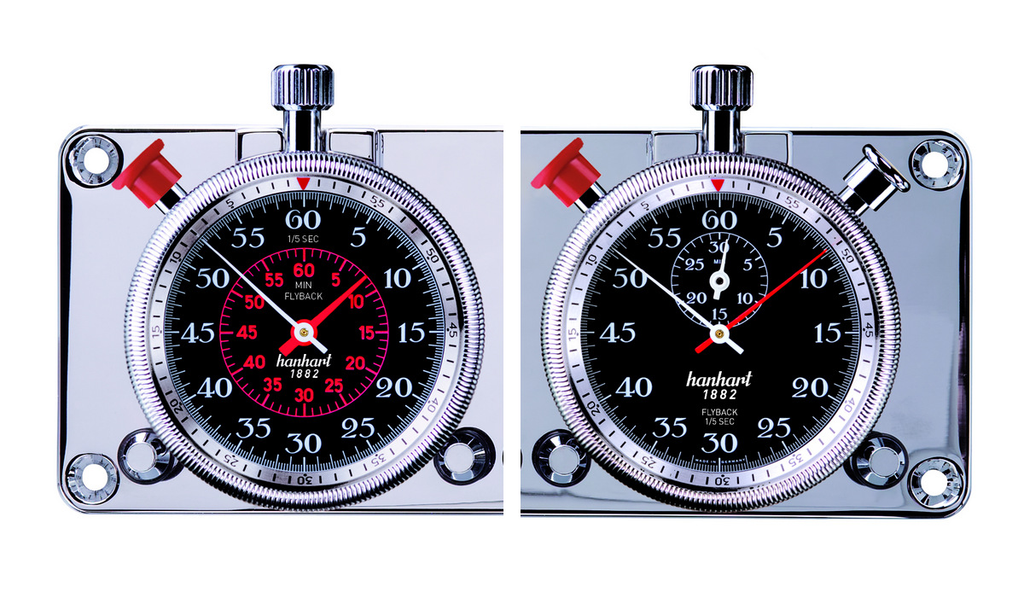
Two timers at the same club race once gave me lap times four tenths apart. Neither was broken. One started at the transponder loop and the other at the start-finish line, and the forty feet between them belonged to one timer and not the other.
Reaction times in Formula 1 have the same problem, except nobody mentions it. The same driver gets quoted at 170 milliseconds in one article and 230 in another, both numbers are correct, and the difference is what each one was measuring.
Two numbers, two different measurements
| The number | What it measures | Typical for an elite driver |
|---|---|---|
| Laboratory reaction | A light appears, a button is pressed. Eye to brain to finger, nothing else | 150 to 180 milliseconds |
| Grid telemetry | Lights out to the car moving, including the decision and the clutch release | 200 to 250 milliseconds, with about 200 cited as the grid average |
| An average adult | The laboratory test, taken once, in a quiet room | Around 250 milliseconds |
| Under 100 milliseconds | Below the floor sprint start research gives for a reaction to the starting gun. In Formula 1 a car moving early is caught by transponders | Penalized as a jump start |
Figures from Formula 1 reporting and published reaction research, checked in October 2026. The two measurements are not comparable, which is the point of the table.
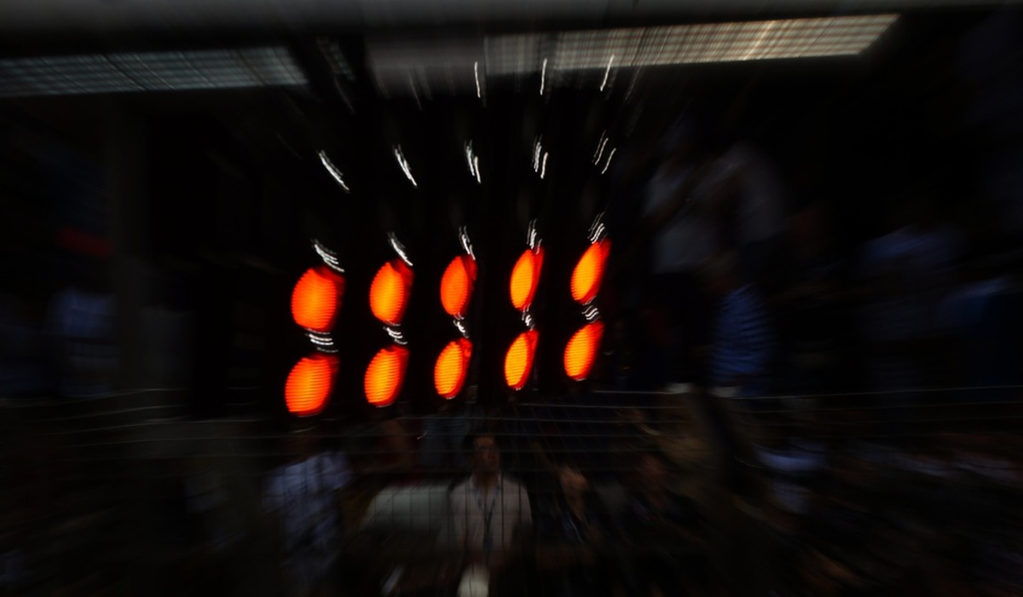
The table above has them side by side. A laboratory produces the first one: a light appears, a button gets pressed. The second one comes off the timing gear at a Grand Prix start. Lights out starts that clock, and the car moving stops it.
Both rows in the table describe an elite driver. One of them was taken in a quiet room. The other was taken on a grid, with the engine running.
Same person, same day, two numbers. Only one of them has a clutch inside it.
What the laboratory number contains
Eye first, then visual cortex. A decision follows, a finger moves, and the whole chain takes a trained adult in a quiet room about a fifth of a second.
Nothing in that measurement is unique to racing, which I find more interesting than the usual framing. Professional gamers score about the same, and so, by published comparisons, do trained pilots. One narrow skill is all those charts ever measured.
What the telemetry number contains
Everything above, plus the parts that make it a race start.
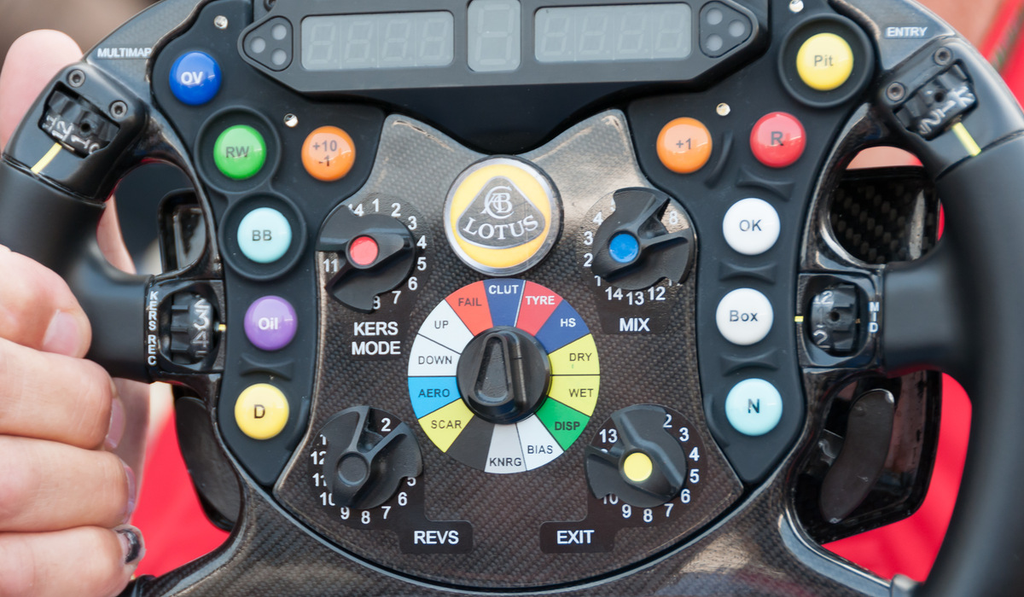
The driver has to decide, not merely respond. He has to release a clutch paddle with a precise amount of travel, because dumping it costs more time than a slow reaction ever would. Then the car has to respond, through a drivetrain with its own delay.
Forty to seventy milliseconds separate the two figures for exactly that reason, and comparing them gets you nowhere. Different equipment measuring the same thing is not what is happening here. The things being measured are different.
About that label
It came off a reaction test website, not out of a paddock.
Several of them label anything under 180 milliseconds elite, invite you to join a club at that number, and paint the whole thing in Formula 1 colors. As a threshold on a laboratory style test, fair enough. As a club, invented. No team says it. No driver has ever been called a member.
Figures like that travel, so it is worth being blunt. A mouse click has nothing in common with what telemetry records, and a good score on a laptop puts nobody within reach of a grid.
Which number should you compare yourself to
The laboratory one, because that is the test you can actually take. On a simple visual test an average adult comes in around 250 milliseconds. Elite performers across several fields reach 150 to 180. A fit, alert person who practices lands somewhere between the two.
The second half of the chain is the part nobody can replicate at home. No clutch. No consequence. No five seconds of sitting still while twenty other people plan to beat you off the line.
A reaction below 100 milliseconds is worth a separate note. That is below the floor that sprint start research gives for a reaction to the starting gun, and a reaction to a light is slower still. In Formula 1 a car moving before lights out is caught by transponders and penalized as a jump start, whatever number gets attached to it.
Why any of this matters
Because the two numbers get mixed constantly, and the mixing always flatters somebody.
Quote the laboratory figure beside a fan’s browser test and drivers look superhuman. Quote the telemetry figure beside the same test and they look ordinary. Neither comparison means anything, and both get made every time this subject comes up.
Our two timers got sorted out by a man with a tape measure who walked the forty feet and wrote the offset at the top of the timing sheet, where it stayed all season. The lesson transferred. When two sources disagree about a number, the useful question is rarely who is wrong. It is where each of them started the clock.
Questions about F1 reaction times
Why do F1 reaction times vary between articles?
Because two different measurements get quoted. A laboratory test gives 150 to 180 milliseconds for an elite driver, while telemetry from a race start gives 200 to 250.
What is the 180-millisecond club?
A label used by reaction test websites rather than a term from the sport. No team or driver uses it, and the threshold describes a browser test rather than a race start.
What does the grid number include that the laboratory number does not?
The decision, the clutch paddle release and the drivetrain’s own delay before the car moves.
What is a good reaction time for a normal person?
Around 250 milliseconds on a simple visual test is typical. Below 200 is excellent, and below 180 is elite for that kind of test.
Why is anything under 100 milliseconds suspicious?
It is below the floor that sprint start research gives for a reaction to the starting gun, and a reaction to a light is slower still. In Formula 1 a car that moves before the lights go out is caught by transponders and penalized.
Jake Holloway is a club racer, track-day instructor, and motorsports editor based near Charlotte, North Carolina. He has raced karts, Legends cars, Spec Miatas, and amateur endurance cars, and he writes for GreenyCars about how racing actually works, from the rule book to the pit lane.
More Stories
The Dakar Rally and Why Finishing It Counts as Winning
The Ten Greatest F1 Drivers, Ranked by a Club Racer
The F1 Circuits Every Fan Should Know, and What Each One Is For
The F1 Races That Stayed Unsettled Until the End
F1 Driver Nicknames, the Professor to Mr. Saturday