

Whether you’ve ever been the only woman at a meeting, or watched your daughter be the only woman on a go-kart track, this article is for you and your daughter. In the more than 70-year history of the world championship, only two women have competed in Formula 1, the last of which was in 1976. Behind the scenes, in front of the strategic planning screens, and in the offices of team managers, women have contributed to the success of the sport over the years.
Women in F1 at a glance
| Woman | First or role |
|---|---|
| Maria Teresa de Filippis | First woman to start a World Championship Grand Prix; 5 entries and 3 starts, all starts in 1958 |
| Lella Lombardi | The only woman to score points: half a point at the 1975 Spanish Grand Prix; 12 starts |
| Divina Galica | Olympic skier; 3 Grand Prix entries, no starts |
| Desiré Wilson | Won an Aurora British F1 series race at Brands Hatch in 1980 |
| Giovanna Amati | Failed to qualify the Brabham three times in 1992 |
| Susie Wolff | Drove first practice for Williams at Silverstone on July 4, 2014 |
| Tatiana Calderón | Test driver for Sauber |
| Hannah Schmitz | Race strategist at Red Bull |
| Laura Müller | Race engineer for Esteban Ocon at Haas |
| Monisha Kaltenborn | Sauber team principal from 2012 to 2017, the first woman to run an F1 team |
| Ruth Buscombe | Race strategist at Ferrari, Haas and Sauber |
Entries, starts and roles from Wikipedia, checked in November 2026. Starts count World Championship Grands Prix only; Desiré Wilson’s 1980 win came in the non-championship Aurora series.
Two women on the grid
Maria Teresa de Filippis, who lived near Naples, drove a Maserati in her first Grand Prix at Spa on June 15, 1958. She later revealed that the race director refused to let her take part, he said, “The only helmet a woman should wear is the one at the hairdresser’s.” “I’ve heard that many times in my life, but it’s always the same,” she said. She retired from motor racing in 1959 after the death of Jean Behra, the boss of the Porsche team she drove for. On 27 April 1975, Lella Lombardi finished sixth in the Spanish Grand Prix at Montjuïc when Rolf Stommelen’s car crashed into a barrier. Four people died in the accident, and the race was abandoned after 29 of the 75 laps had been completed. Points were halved for completing less than 60% of the total distance, so Lombardi scored just 0.5 points. The tragic incident has been the subject of debate for over fifty years.
Embed from Getty ImagesGalica, Wilson and Amati
Divina Galica represented Great Britain in skiing at the Winter Olympics, where she captained the women’s team, and entered the 1976 British Grand Prix. She drove the No. 13 Surtees car, the first No. 13 car to compete in the World Championships in 13 years. She failed to win, and in 1978, she entered twice in the Hesketh car, but failed to qualify either time. On April 7, 1980, Desiré Wilson won a round of the British Aurora F1 Championship, the Evening News Trophy, at Brands Hatch, driving a Theodore Racing Wolf. In 1992, Giovanna Amati failed to qualify the Brabham car three times, and was replaced by Damon Hill.
Women entered in World Championship races
| Driver | Years entered | Starts | Note |
|---|---|---|---|
| Maria Teresa de Filippis | 1958 to 1959 | 3 | All three starts in 1958, in a Maserati |
| Lella Lombardi | 1974 to 1976 | 12 | Half a point at the 1975 Spanish Grand Prix |
| Divina Galica | 1976 and 1978 | 0 | Three entries, never qualified |
| Giovanna Amati | 1992 | 0 | Three failures to qualify with Brabham |
Figures from Wikipedia’s list of female Formula One drivers, checked in November 2026. An entry counts even when the driver failed to qualify, which is why de Filippis has five entries but three starts.
Back in the car
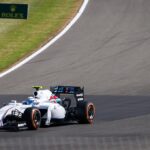
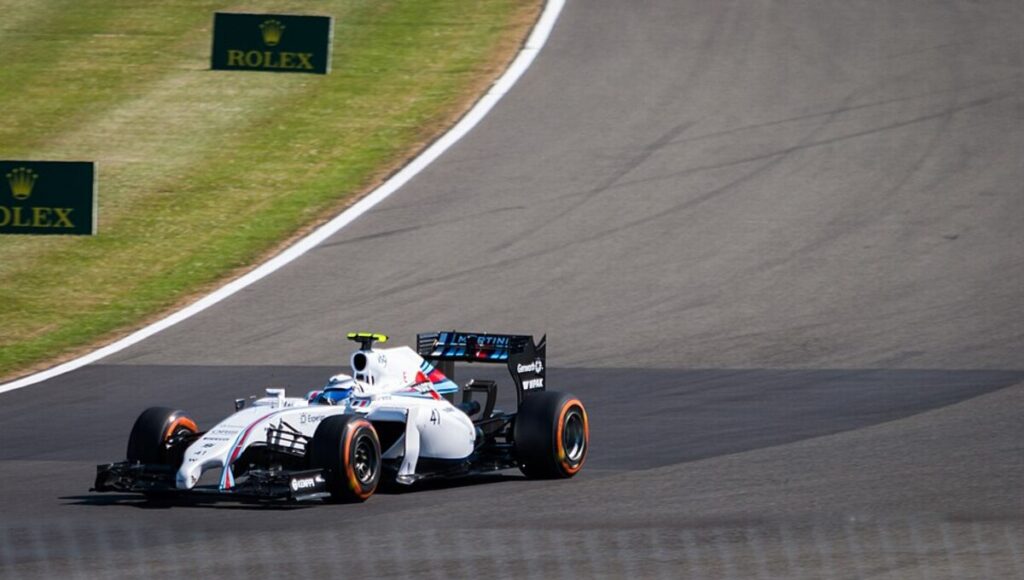
For 22 years thereafter, no female driver competed in a Formula One weekend. On 4 July 2014, Susie Wolff broke the record by driving a Williams car in first practice at the British Grand Prix, but was forced to stop after a few laps due to an oil pressure problem. She participated in more training in 2014 and 2015. In October 2018, Tatiana Calderón drove a Sauber in Mexico, calling it “a day I will never forget”. She became the first Latina woman who drove a modern Formula One car. Jamie Chadwick won the W Series three times in 2019, 2021 and 2022, before she moved to the Indy NXT Series. In 2023, Wolff became managing director of the newly formed F1 Academy, a program to train female drivers for F1 teams. Its champions include Marta García in 2023, Abbi Pulling in 2024 and Doriane Pin in 2025. The Austin Grand Prix weekend in 2026 had three F1 Academy races.
Strategy on the pit wall
That’s when I started to get angry. Hannah Schmitz has been with Red Bull since 2009, and while Max Verstappen won the Brazilian Grand Prix in 2019, she collected the constructors’ trophy on the podium. She helped Sergio Pérez win the Monaco Grand Prix in 2022 and Verstappen win the Qatar Grand Prix in 2025, and became Red Bull’s head of race strategy in 2026. Ruth Buscombe has held strategy positions at Ferrari, Haas and Sauber, and served as head of race strategy at Sauber. While Bernadette Collins was Aston Martin’s head of race strategy until 2022.
In January 2025, Haas appointed Laura Müller as Esteban Ocon’s race engineer, and made her the first woman in F1 history to hold the position full-time until 2026. If you’ve ever wondered why the Grand Prix circuit in Melbourne, Australia, was renamed Turn 6 in honour of Schmitz and Müller, a guest speaker at the ceremony said as he left the track: “The train has left the station.”
Leena Gade became the first female race engineer to win the 24 Hours of Le Mans in 2011, she engineered an Audi, and won again in 2012 and 2014.
Running a team
Monisha Kaltenborn was born in Dehradun, India. She became the CEO of the Sauber team in 2010 and became team principal in October 2012, and became the first woman to lead a professional Formula One team. You can learn more about the teams that developed this racing style in our Ron Dennis article.
Embed from Getty ImagesQuestions about women in F1
How many women have started a Formula 1 Grand Prix?
Two. Maria Teresa de Filippis made three starts in 1958, and Lella Lombardi made 12 starts in the mid 1970s.
Has a woman ever scored points in Formula 1?
Yes. Lella Lombardi scored half a point at the 1975 Spanish Grand Prix, which was stopped after 29 of 75 laps, so only half points were awarded.
Has a woman ever won a race in a Formula 1 car?
Not a World Championship Grand Prix. Desiré Wilson won a round of the British Aurora F1 series at Brands Hatch in 1980.
When did a woman return to a Formula 1 race weekend?
Susie Wolff drove first practice for Williams at the 2014 British Grand Prix on July 4, 2014, the first woman in a Grand Prix weekend in 22 years.
Who was the first woman to lead a Formula 1 team?
Monisha Kaltenborn, who was team principal of Sauber from 2012 to 2017.
What does Laura Müller do in Formula 1?
She is Esteban Ocon’s race engineer at Haas, a role she took on in 2025 as the first woman to work as a full time race engineer in F1.
Sources
- List of female Formula One drivers, Wikipedia
- Maria Teresa de Filippis, Wikipedia
- Lella Lombardi, Wikipedia
- 1975 Spanish Grand Prix, Wikipedia
- Susie Wolff, Wikipedia
- Monisha Kaltenborn, Wikipedia
- F1 Academy, Wikipedia
Annie is an automotive writer for GreenyCars. Years around Formula 1 paddocks during her marriage to a racing driver left her with strong opinions about drivers and team bosses, and she now writes about everything from Grand Prix racing to EVs and hybrids.
More Stories
Rory Byrne: The Designer of Schumacher’s Title Cars
Ross Brawn: The Strategist Who Won Everywhere
Colin Chapman: Lotus and the Ideas That Changed F1
Ron Dennis: The Man Who Shaped McLaren