
PexelsOn one occasion, I spent 22 laps in a race at Roebling Road following a Spec Miata that I was faster than. That day helped me learn more about aerodynamics than books could ever hope to teach. Whenever I almost got close enough to make a move, my car started to push at the front at the entrance of the corner. By the exit I had lost the tenth I had just found. My father watched everything from the sidelines and gave me the only piece of advice he ever shared with me about traffic, which was that they all come past us eventually. After twenty minutes, we ended up with a very specific smell in the car that was practically a mix of hot brakes and some rubber.
Formula 1 has been having the same argument with itself for fifty years, with more money involved and a rule book to write it down in. The history of overtaking in this sport is a history of scarcity. It is also a history of the devices the regulations invented to manufacture a pass that the aerodynamics had taken away. Among them, DRS took pole position and survived for a period of fifteen seasons until the introduction of the rules for this year, which excluded it.
The rules which appear here are taken from the 2026 regulations as prepared by FIA with explanations issued by Formula 1.
The reason passing became difficult in the first place
The modern car generates most of its grip from the air that it travels through. The air behind that car is a disturbed, low energy mess, and the following driver has to work in it. The closer a car gets, the less downforce it has. The corner that brings a driver close is the one that sends him back out again. That was my situation at Roebling Road with 130 horsepower. It is the same situation, scaled up a long way, that the sport has been designing around since the late 1970s.
The attempt that came before this one
The rules of 2022 attempted to fix the situation with the design of the bottom of the car, which allowed for a smoother wake behind the car to be formed and the following car to stay in that part of the airflow. Theoretically, the cars were supposed to follow each other easier now, although the drivers were complaining anyway, as the clean wake was connected to the floor design that was making their rides harder on any bumps.
The role of DRS
| Number | What it is |
|---|---|
| 2011 | The season DRS arrived |
| 15 | Seasons it lasted before being dropped |
| 1 second | The gap that has always decided who gets the help |
| 0.5 MJ | Extra energy for the car behind, per lap |
| 150 kW | Cap on the additional boost in a race since the Miami weekend |
| 350 and 250 kW | Full deployment in the useful zones, and the level everywhere else |
| 3 seconds | Roughly the straight length the FIA expects the low drag setting to need |
Figures published by the FIA and Formula 1, with the in-season change to boost reported around the Miami weekend.
The Drag Reduction System was introduced with the beginning of the 2011 racing season, and its essence could be summarized in a single sentence. The flap of the rear wing could be opened on some specific straight sections of the track, and hence the drag that the car suffers from was decreased, leading to a faster performance of the car in comparison with the car in front of it.
Access to it was restricted, which is the part that made it controversial. A driver had to be within one second of the car in front at a detection point. If he was, the flap could be opened in the activation zone that followed. Either you had it or you did not, and one second was the whole difference.
People called it a push button pass, and a good many times it was exactly that. Other times it was the only reason a quicker car ever got to try, and I never made up my mind about it. I argued both sides of it with students on track days for years, usually in the same afternoon. Fifteen seasons is a long run for a compromise.
I am absolutely certain about what happens to a driver who can’t overcome a situation and keeps trying. When I was seventeen I came in second in a karting competition which I had been leading earlier, and I made four attempts at a pass that was never going to be there. I finished fifth, with the tires gone and the front end pushing. My father asked the question he always asked on the way home, which was whether I had been racing him or racing angry. I did not have an answer that night, and I have been using that question on students ever since.
The wings that move on every lap now
Pexels| System | Who can use it | What it does |
|---|---|---|
| DRS, 2011 to 2025 | Only a car within 1 second at the detection point | Opened one rear wing flap in the activation zone |
| Straight Mode and Corner Mode, from 2026 | Every car, on every lap | Move the front and rear wing flaps between a high downforce position and a low drag one |
| Overtake, from 2026 | Only a car within 1 second at the detection point | Grants an extra 0.5 megajoules of energy for the following lap |
| Partial mode | Called by race control in the wet | Front elements in Straight Mode, rear wings held in Corner Mode |
Compiled from the FIA regulations for 2026 and from the explanations Formula 1 published with them.
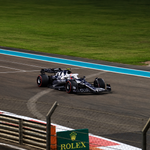
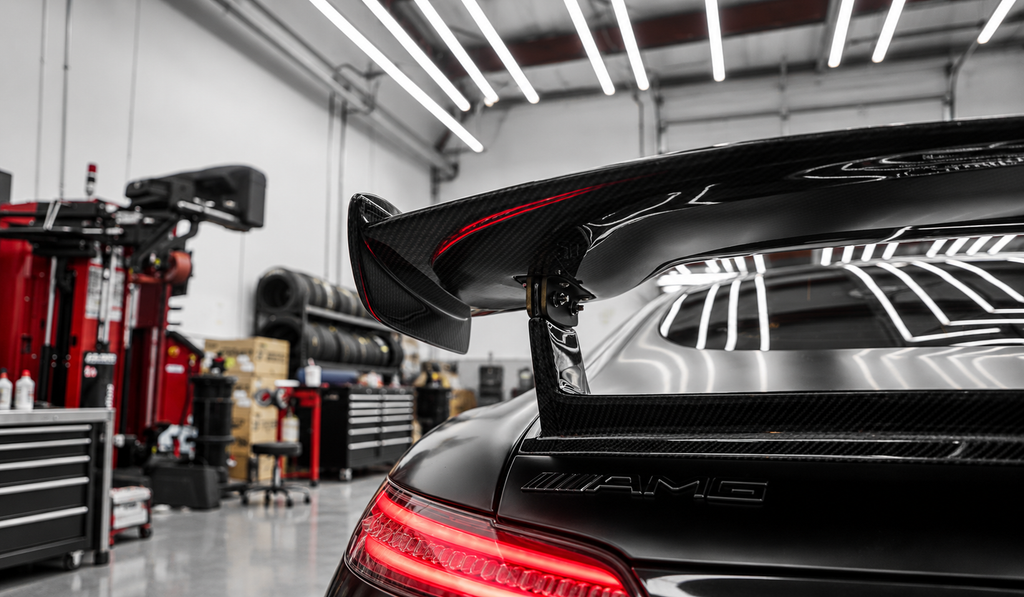
What replaced DRS is not a single flap, but a pair of wings that change shape at both ends of the car. They switch between Corner Mode, which is the normal high downforce position, and Straight Mode. In Straight Mode the flaps open and drag falls away, on the sections of track where low downforce is safe.
The important part is who is allowed to use it. The answer is everybody. No proximity rule is attached to the aerodynamics. The leader and the last placed car can both run Straight Mode down the same straight on the same lap. That makes the system a tool for going quickly around a circuit, and not a device for passing somebody.
The FIA expects Straight Mode to be available on any straight that takes longer than about three seconds to travel. In the wet, race control can enable a partial mode. The front wing elements go to Straight Mode and the rear wings are held in Corner Mode, because a car with the rear wing unloaded in standing water is not something anybody wants to watch.
The overtaking aid is electrical now
So if the wings are available to everyone, what is left to help the car behind? Energy, and quite a lot of it.
That job now belongs to a mode the sport calls Overtake. The help goes to the car behind, and it comes with one condition. The car has to be within one second of the one ahead at the detection point, normally the final corner of the lap. The additional 0.5 MJ gained will be used in the next lap. The leader will not get anything additional, and his own deployment tapers off at the top end. In this way, the two cars will reach the straight with different budgets.
The rules were made stricter during the season. Starting from the Miami weekend, the additional boost in the race was limited to 150 kW. The driver is allowed to use the full 350 kW only in those zones where the authorities believe it is effective, while in the remaining zones of the lap he will get 250 kW.
What all of that results in is the use of a pass that is consumed rather than activated. Whether the energy is used all at once or spread across the lap, a racer who uses up all of their resources too soon will have nothing left by the time the moment comes. My own version of that lesson cost me 22 laps at Roebling Road, with the tires being used up by the end.
As to why the difference is larger than it sounds
The essence of making DRS work lay in keeping within one second at the detection point, as that gauge decided whether you would have the tool or not. With the new regulations however, it works for everyone throughout the whole race. Advantage is moved from the aerodynamics to the power unit where the measurement is in megajoules rather than in degrees of flaps.
The debate I had with that Miata wasn’t about the wing. It was mainly due to the fact that there was a car in front of me taking away the air from me and, the truth is that no rulebook can solve that issue; it just changes the aspect of the problem to other parts of the vehicle.
What I keep an eye on now
The space at the last corner is where the extra energy appears, hence it is the first thing to pay attention to. Getting there with a second or so gap already means that the next lap is lost and the driver knows that long before anyone speaks about it.
The second half of the straight also deserves the same amount of consideration. A car that draws level then stops accelerating has used up all its potential, and that shows you more about the previous thirty seconds than any graphic.
The habit I find most difficult to tame in the right seat of a racing car is that of concentrating on the car in front instead of looking for the exit. Vision becomes fixated upon the bumper, thus the hands follow suit, and the corner comes before the student has finished processing the real problem. It may be hard to believe, but nobody in Formula 1 ever makes that error, however the principle remains true at all levels: a successful overtaking maneuver is executed two turns earlier rather than in the precise moment when two vehicles are side by side.
An unsuccessful try is now more expensive than before. A driver who spends the energy without making any move will have to rebuild it, while the man ahead would keep doing things just as before. My father’s theory has proved to be more accurate than many of the technical projections I have studied. They do all come past eventually, one way or another, and the rules only decide how expensive it is going to be.
What readers ask me about DRS
No. It was dropped after fifteen seasons and the 2026 rules do not include it in any form.
Two things. Straight Mode and Corner Mode, which every car can use, and Overtake, an electrical boost for the car behind.
A driver within one second of the car ahead at the detection point receives an extra half a megajoule to deploy on the following lap.
Yes. The aerodynamic mode carries no proximity rule, so the leader and the last placed car can both use it on the same straight.
Jake Holloway is a club racer, track-day instructor, and motorsports editor based near Charlotte, North Carolina. He has raced karts, Legends cars, Spec Miatas, and amateur endurance cars, and he writes for GreenyCars about how racing actually works, from the rule book to the pit lane.
More Stories
Niki Lauda and the Forty-Three Years After the Fire
Pirelli F1 Tires Explained From Compounds to Warm-Up and Degradation
How to Become an F1 Driver When Karting Is Only the First Step
The F1 Power Unit Explained and Why the Lap Is Now an Energy Budget
F1 Driver Salaries and What the Reported Numbers Actually Mean