
PexelsRoad Atlanta, fourth hour, and suddenly the radio was buzzing with a math question: eleven laps of fuel and thirteen laps to run. My crew chief calmly spoke over the radio; he didn’t even bother to check if I could do it. He simply gave me the lap time I needed to achieve. Soon, I was sweating as I was scratching some numbers on a piece of masking tape that was stuck on my dashboard. By the time I reached the third hour on the clock, the tape had started to curl from one end and I had to read it with the help of my thumb.
That is the way I have come to realize what a good lap really feels like. I lifted at the midpoint of the hundred feet markers, coasted halfway through the corner and applied the throttle later than I thought. The vehicle has no slowing down where it counts and stops thirsting for gas where it does not matter.
Formula 1 has focused on the same calculations in the last season using superior means than I will probably ever use. The old power units derived almost 80 percent of their work from combustion and around 20 percent from electric devices, while the new rules aim to create a more balanced version. It was for the first time since a long time that both the chassis and the power unit were altered at the same time.
What sits behind the driver
| Element | What it does |
|---|---|
| ICE | The 1.6-liter V6 turbo that burns the fuel |
| Turbocharger | Driven by exhaust gas, feeds compressed air to the engine |
| MGU-K | Recovers energy under braking and deploys it to the rear wheels |
| Energy store | The battery that holds what the MGU-K recovers |
| Control electronics | Manages what goes where, and when |
| Exhaust | Carries the gas away; since this season, nothing harvests it |
Each element type has its own allowance for the season, and going past it brings grid penalties. Compiled from the FIA regulations for 2026.
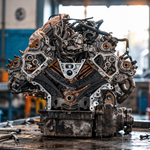
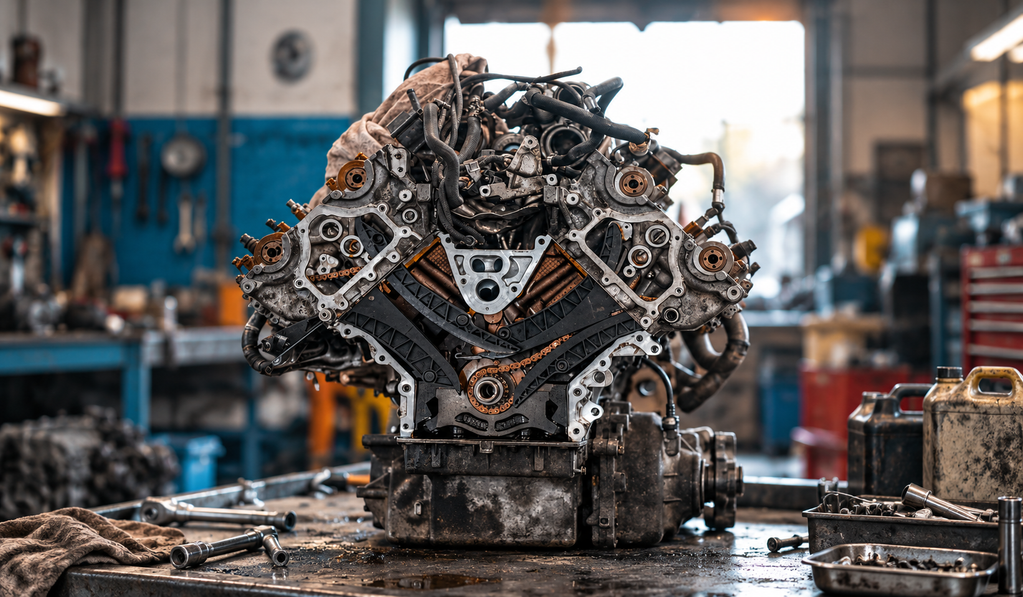
I was present at a trade show in March and spent 20 minutes standing by one of those machines I hadn’t planned to spend time there. In the middle is a turbocharged 1.6-liter V6. It has the same size and arrangement as the engine used in this sport since 2014.
Surrounding it is the turbocharger, and electric motor, battery, and electronic devices that control the flow of energy. All of the aforementioned components are counted separately in the sport’s regulations and given allowance for the season. Exceeding it leads to grid penalties, and that’s why a racer is able to start the event from the last row without contact with the other racers.
That is the reason the word power unit is used, instead of engine. Removing a component from the list would lead to the change in this description and this is what happened this season.
The half that comes from the battery
Pexels| Number | What it is |
|---|---|
| 120 to 350 kW | Electric output, then and now |
| About 400 kW | What the combustion engine contributes |
| Around 750 kW | The two together |
| Up to 8.5 MJ | Energy recovered on a lap, near double the old total by Honda’s count |
| 100 percent | Share of sustainable fuel in the tank |
| One element gone | The MGU-H, which harvested exhaust energy until this season |
Outputs and recovery figures published by Formula 1 and the FIA with the 2026 rules; Honda technical material as a second source on recovery per lap.
The key figure is 350 which is the current output of the electric side measured in kilowatts. It was 120 from 2014 until the last season. The combustion side has given in cutting its output down to around 400 from what used to be around 550. When combined, the two systems produce around 750. Of that, half of the energy received by the rear wheels is generated by a battery that has been empty until that moment. Performance is not dependent on fuel consumption anymore but instead is determined by how well the engine and battery cooperate.
The advancement in recovery is much bigger than the improvement in output. Recovery through braking, coasting, and part-throttle has a lot to do with energy. Honda claims that the limit is around 8.5 megajoules, which implies that it is almost double than its predecessor. Comparatively, the old MGU-K limit stands at only 2 megajoules, which means that recovery through braking, coasting and part-throttle is four times as much.
Moreover, the limit is also altered according to the racetrack used. FIA allows a maximum of 7 megajoules during the qualifying round. Tracks that don’t recover enough energy can register as low as 5 megajoules. Monaco and the Hungaroring are allowed up to 9 megajoules, with the extra half a megajoule the rules permit there.
I have owned a hybrid road vehicle for six years and thought I knew everything about it already, but it turned out I was wrong. The hybrid road vehicle wastes superficial energy while F1 car saves energy during all stages of driving.
Why the complicated piece got thrown out
MGU-H was collecting energy from exhaust gases produced from the turbo shaft. The system was introduced as part of hybrid regulations in 2014 and immediately became the most expensive solution for the car. It was also of little relevance for the manufacturers involved in road cars, and this was the reason its days were numbered.
And it is gone now. The turbo continues working, exhaust gases are still emitted through the exhaust pipe, and energy that used to be harvested is no longer harvested.
This decision has attracted the attention of manufacturers. Audi came as a manufacturer. Ford returned along with Red Bull Powertrains. Both companies want hardware that could have some significance beyond paddock and are not willing to spend 10 years learning a part that nobody else uses.
Fuel that did not come out of the ground
Fuel was familiar to me. Our fuel sat in dented canisters tucked in the corner of the trailer. Each canister had a line drawn in grease pencil telling us the amount used each time. I know the smell that corner so well that I could identify it with my eyes blindfolded.
No one would ask at our stage where the carbon had come from, but Formula 1 has to ask this year. All 20 cars are burning 100% of the newest sustainable fuels that come from wastes or from the air rather than from wells and the engines are burning it like the old fuel.
It sounds very much the same. This is more important than people want to admit since this controversy was never only about time. Formula 1 must reach zero net effect by 2030.
What the driver is now managing
This is how the nature of a race changes at this point. The driver approaches the end of a straight line focusing not on the state of the tires, but rather on the amount of used up energy. Where is the car going to regain energy? What is the cost of the next two series of turns? Deployment is a form of budgeting, and the funds are running out. No one has ever regarded my masking tape device as a fledgling invention but it worked on the same principle. The system used for overtaking functions on the same principle. A driver who gets into the limits of 1 second from the one in front at the designated point receives an additional half of a megajoule for a lap. The leader gets nothing.
Since the Miami weekend the extent of boost has been reduced. Now, the maximum amount of boosting obtained in a race is fixed at a limit of 150 kilowatts. The whole 350 is reserved for the so-called useful zones, and 250 apply in every other place.
What it looks like from the outside
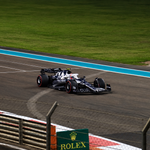
The first thing to catch my attention at a slow corner is the exit. The electricity kicks in quickly and fiercely, allowing modern vehicles to exit a hairpin, something vehicles of the past couldn’t achieve. After the hairpin comes a long straight section. If your vehicle dips towards the end of the straight while the car behind remains steady, it is a sure sign that you have already spent a lot of energy earlier in that lap.
I recall how I was watching the first hybrid race of the past generation on a phone in a motel room near Savannah with the sound turned to maximum volume. The race took place in March 2014 in Melbourne. I hated what the sport had done to the noise, and it took me years to hear anything else in it.
Fast forward twelve years, I am able to hear the cars use their energy via the television speaker.
Eleven laps of fuel, thirteen laps to run
We completed those thirteen laps on just eleven laps worth of fuel. I was two seconds per lap slower than my best lap for the stint and the team gained a position due to the fact that the car in front of us had stopped while we hadn’t. No camera was directed at that stint but it still remains the best performance I have had in my career; it is the same skill that has become the focus of the Formula 1 sport thanks to the new regulations introduced in 2026.
What readers ask me about the engine
The same 1.6-liter V6 turbo as before, paired with a much bigger electric motor and a battery.
Close to half. Roughly 400 kilowatts come from combustion and 350 from the electric side.
It was dropped for 2026, on cost and complexity. The part had almost no use in a road car, and manufacturers joining the sport did not want to build one.
Advanced sustainable fuel, made from waste or captured carbon rather than from a well.
Jake Holloway is a club racer, track-day instructor, and motorsports editor based near Charlotte, North Carolina. He has raced karts, Legends cars, Spec Miatas, and amateur endurance cars, and he writes for GreenyCars about how racing actually works, from the rule book to the pit lane.
More Stories
How to Become an F1 Driver When Karting Is Only the First Step
F1 Driver Salaries and What the Reported Numbers Actually Mean
Spa-Francorchamps Circuit Guide to the Track Drivers Respect Most
F1 Pit Stops Explained With the Records, the Technique and the Strategy
How an F1 Race Weekend Works From Friday Practice to Sunday’s Race