

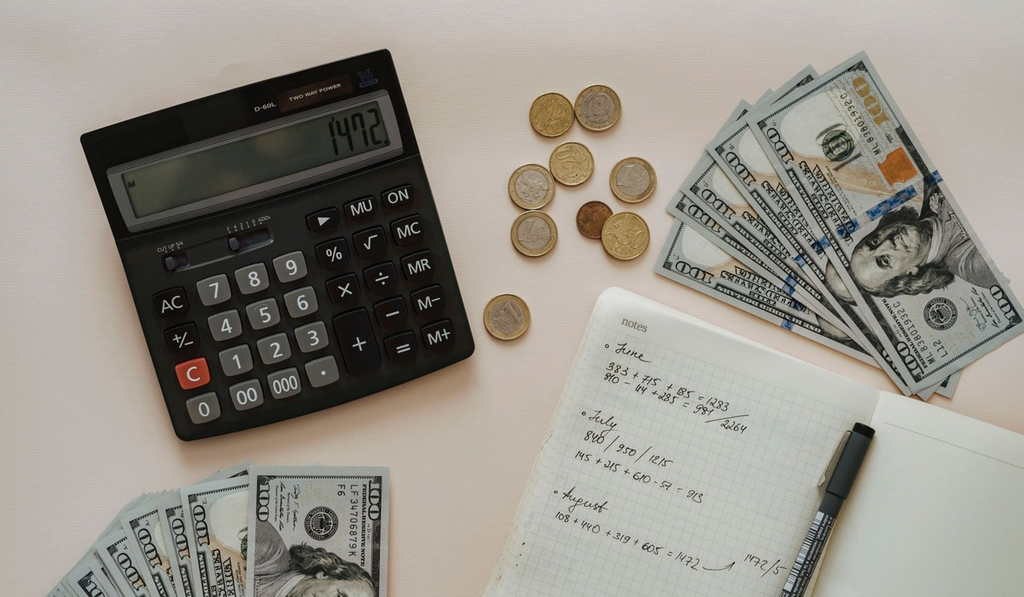
Our endurance team kept its accounts in a spiral notebook. Entry fee, tires, fuel, the brake pads we went through at Roebling, split four ways and settled by text message on the Monday. Nobody ever got paid for finishing anything.
Formula 1 runs on the same three questions and different numbers. Where does the money come from, who divides it, and what happens when a new name turns up wanting a share.
Where the money comes from
| Where F1 revenue comes from | 2025 figures |
|---|---|
| Total revenue | 3.87 billion dollars, against about 1.8 billion in 2017 |
| Media rights | Roughly a third of the total, around 1.2 billion dollars |
| Race promotion | Fees paid by promoters for the right to host a Grand Prix |
| Sponsorship | About 22 percent of the total, roughly 850 million dollars at series level |
| Other | Hospitality, freight and the Paddock Club |
Revenue figures from Liberty Media results for 2025 and published breakdowns, checked in October 2026. Team sponsorship sold by the teams themselves is separate from this pool.
Three sources carry most of it, and the table above has the full breakdown. Media rights are the largest, around a third of the total. Race promoters pay for the right to host a Grand Prix. Sponsorship at series level makes up most of the rest.
That revenue goes to Formula One Group as the commercial rights holder, and in 2025 it came to 3.87 billion dollars. For scale, the figure was about 1.8 billion in 2017, when Liberty Media bought the commercial rights.
What teams earn is a separate question. They get a share of that pool, and then they go and sell their own sponsorship on top of it, which for most of the grid is the larger half of the business.
How it gets divided
| 2025 prize money | Payment |
|---|---|
| Ferrari | 277.7 million dollars, including historic payments no other team receives |
| Mercedes | 230.8 million dollars |
| Red Bull | 202.8 million dollars |
| McLaren | 165.8 million dollars, fourth on the list |
| The pool | About 1.4 billion dollars in total, of which roughly 1.05 billion was the performance pool |
| From 2026 | The same pool divides eleven ways after Cadillac entered |
Prize money payouts as reported from Liberty Media results. Liberty reports team payments as a single line. The split between the performance pool and the historic payments comes from published analysis of those filings.
Roughly 1.4 billion dollars went to the teams as prize money in 2025, about 36 percent of total revenue, or about 45 percent of the primary revenue the sport counts separately. The split is set by the Concorde Agreement, and it has two layers: a performance pool divided on the previous season’s standings, and payments made outside that pool.
Here is the part that surprises people. McLaren won both titles in 2025 and finished fourth on the prize money list, at 165.8 million dollars. Ferrari topped it at 277.7 million, Mercedes took 230.8 and Red Bull 202.8.
Two things explain that. The performance pool, about 1.05 billion dollars of the total, was divided on the 2024 standings, and McLaren’s share of it was the largest at roughly 147 million. The rest of the money sits outside that pool, in payments for long-run success and, in Ferrari’s case, a legacy bonus no other team receives, and that is where the other three pulled ahead.
What a new team costs everybody
Cadillac joined for 2026, and the eleventh entry means the same pool divides eleven ways instead of ten.
The mechanism for that is an anti-dilution fee, which a new entrant pays to the teams already there. It was 200 million dollars under the previous agreement. Cadillac reportedly paid 450 million, distributed as about 45 million to each existing team.
On the published projections, Cadillac earns something like 63 million dollars in its first season, while McLaren’s share of the pool falls from 165.8 million to roughly 128. Revenue growth may cover some of that. The arithmetic of a smaller slice does not go away.
The cost cap, and why it changed the business
Before 2021 a team could spend whatever its owner was willing to lose, and several did. The cap changed that, and for 2026 it sits at 215 million dollars, with driver salaries and the three highest-paid staff excluded.
What that did to the business model is the part people miss. A Formula 1 team used to be a money pit that bought marketing. Capped spending plus rising prize money turned several of them into companies that make a profit, which is why franchise valuations have gone where they have.
It also changed what money buys. When everybody is limited to the same spend, the advantage moves to how well it is spent, and that is a harder thing to purchase.
What this means for the people watching
Three practical things come out of all this.
A team fighting for eighth in the championship is fighting for real money, not pride, which is why the last two races of a season produce defending that looks disproportionate to the positions involved.
A midfield team with good sponsorship can out-earn a struggling famous one, because prize money is only half the picture. And a single title does less for the accounts than a run of good seasons, which is not how anybody celebrates it.
Our notebook had none of this in it. One season I added up what the four of us had spent and then closed it without telling anybody the number, which is the club racing version of financial strategy, and the only part of this subject I have ever practiced personally.
Questions about F1 money
How much money does Formula 1 make?
Formula One Group reported 3.87 billion dollars in revenue for 2025, against about 1.8 billion in 2017 when Liberty Media bought the commercial rights.
How is F1 prize money divided?
Through the Concorde Agreement, in two layers: a performance pool split on the previous season’s standings, and payments made outside it for long-run success. About 1.4 billion dollars went to the teams in 2025.
Why did McLaren earn less than Ferrari after winning the title?
McLaren took the largest share of the performance pool, which is split on the previous season’s standings, but the payments made outside that pool, including Ferrari’s legacy bonus, pushed three teams above it.
What is the anti-dilution fee?
A payment from a new entrant to the existing teams, to offset their smaller share of the pool. It was 200 million dollars under the previous agreement, and Cadillac reportedly paid 450 million.
What is the F1 cost cap in 2026?
215 million dollars, with driver salaries and the three highest-paid staff excluded from it.
Jake Holloway is a club racer, track-day instructor, and motorsports editor based near Charlotte, North Carolina. He has raced karts, Legends cars, Spec Miatas, and amateur endurance cars, and he writes for GreenyCars about how racing actually works, from the rule book to the pit lane.
More Stories
The Dakar Rally and Why Finishing It Counts as Winning
The Ten Greatest F1 Drivers, Ranked by a Club Racer
The F1 Circuits Every Fan Should Know, and What Each One Is For
The F1 Races That Stayed Unsettled Until the End
F1 Driver Nicknames, the Professor to Mr. Saturday