The first Saturday night short track I ever went to ran heat races before the feature. My father explained the order of business on the walk in from the gravel lot, over the smell of hot dogs and race fuel. Win your heat, start the big one up front. Wreck in your heat and you spend the feature looking at everybody’s mirrors. That made sense to a nine year old in about four minutes.
F1 borrowed the Saturday race and left that part out.
A sprint pays championship points and fills a third day with racing. It sets nothing. The grid for the Grand Prix comes out of its own qualifying session, run after the sprint is over. Every sprint weekend somebody emails me to ask what Saturday is for, then. The answer is a strange little economy. The points are cheap and the damage is not. Rules below are from the FIA 2026 Sporting Regulations Issue 08, points and history from Formula 1 and the FIA.
What a sprint is, in plain terms
The distance comes from the rule book rather than from taste. A sprint runs the least number of complete laps exceeding 100 kilometers, about a third of a Sunday. The clock on it is one hour. A suspension stretches that to an hour and a half in total.
No pit stop is mandatory. Nobody has to save tires for later. Most of the ones I have watched finished inside half an hour.
Points stop at eighth place. One point there. A win pays eight, and every place in between moves the total by a single point. F1 dropped the fastest lap bonus in 2025, and the sprint never had one to begin with. A sprint win never enters the record books as a Grand Prix victory.
100 km
distance, a third of a Sunday
1 hour
time limit
1.5 hours
total after a suspension
8
points for the win
Friday decides Saturday now
At a sprint weekend the only practice session is an hour long and happens on the first day. Sprint qualifying follows it, no less than two and a half hours and no more than three and a half hours later, and it runs twelve minutes, then ten, then eight, with seven minute breaks. Six cars drop out after each of the first two segments.
Tire choice is not free in that session. A new set of mediums is mandated for SQ1 and SQ2, and softs, new or used, for SQ3.
Sprint qualifying in 2026
| Segment | Length | Tires | Then |
|---|---|---|---|
| SQ1 | 12 minutes | A new set of mediums | Six cars drop out |
| SQ2 | 10 minutes | A new set of mediums | Six more drop out |
| SQ3 | 8 minutes | Softs, new or used | Sets the sprint grid |
| Seven minute breaks between segments. Source: FIA 2026 Sporting Regulations. | |||
One hour of running, then a qualifying session that sets a race grid. I keep thinking about what that would have done to my own Saturdays. In Spec Miata I got a practice session, a qualifying session and a race, and I still reached the grid wishing for another twenty minutes with the car. Take two of those away. The wishing starts a day earlier.
Eight points and what they actually buy
Sprint points against Grand Prix points
| Finishing position | Sprint points | Grand Prix points |
|---|---|---|
| 1st | 8 | 25 |
| 2nd | 7 | 18 |
| 3rd | 6 | 15 |
| 4th | 5 | 12 |
| 5th | 4 | 10 |
| 6th | 3 | 8 |
| 7th | 2 | 6 |
| 8th | 1 | 4 |
| 9th | 0 | 2 |
| 10th | 0 | 1 |
| No fastest lap bonus in either race since 2025, and the sprint never had one. Maximum from one sprint weekend is 33 points. Source: Formula 1, FIA. | ||
No fastest lap bonus in either race since 2025, and the sprint never had one. Maximum from one sprint weekend is 33 points. Source: Formula 1, FIA.
The arithmetic is worth doing. Winning the sprint pays about what sixth place pays on Sunday, and it is banked before the Grand Prix turns a wheel. Six sprint weekends put 48 points on the table for a driver who wins the lot, which is close to two Grand Prix victories.
8
what a sprint win pays, about sixth place on Sunday
48
points from winning all six sprints
33
the most one sprint weekend can pay
That is the part people miss when they call the sprint a sideshow. Nobody wins a title on Saturdays. A driver who takes six or seven points most sprint weekends and finishes fifth on the Sunday, though, has turned an ordinary weekend into sixteen or seventeen points. None of it makes the highlight reel.
I called sprint points an exhibition in a column once, not worth anybody’s attention. The comments did the arithmetic for me. Somebody pulled up the standings and pointed out that the gap between second and third was smaller than what the man in second had collected on Saturdays that year. I have not used the word exhibition since.
The maximum haul from a sprint weekend is 33 points, 25 plus 8. Both figures go into the same drivers’ and constructors’ tables. There is no separate sprint standings page, whatever the broadcast graphics suggest.
The expensive half of the equation
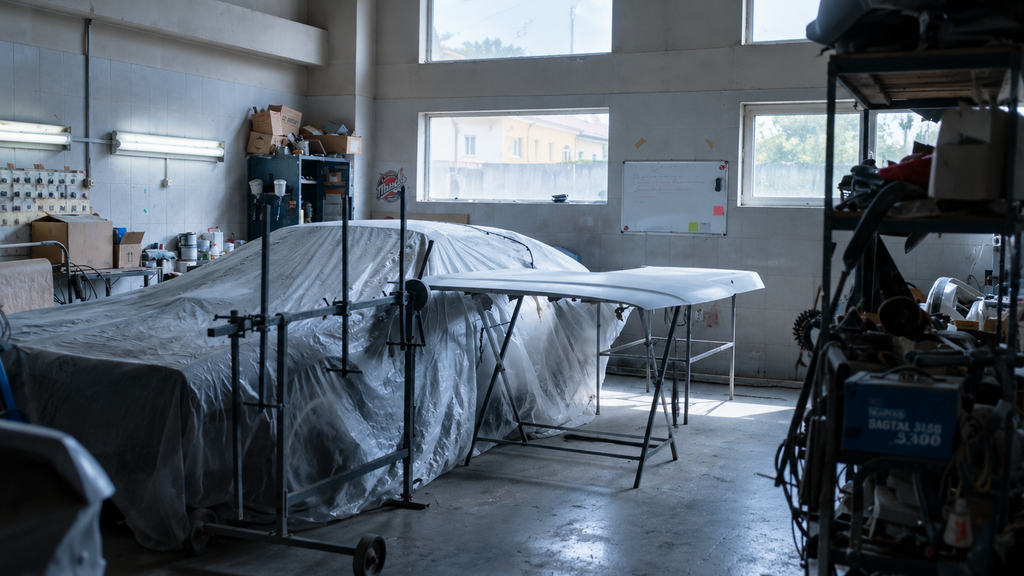
Now the other side of the ledger.
Under parc fermé the car is locked from the first lap of sprint qualifying until the sprint starts, then again from the first lap of Grand Prix qualifying until the race. A car in the wall on Saturday morning means more than new bodywork for the crew. The repair happens inside a rule set that governs what may be replaced and what may be adjusted, with a technical delegate watching.
LOCK ONE
From the first lap of sprint qualifying until the sprint starts.
LOCK TWO
From the first lap of Grand Prix qualifying until the race.
BREAK THE RULES
The repair happens with a technical delegate watching what is replaced and adjusted.
The old format punished it harder still. In 2021 the sprint set Sunday’s grid. Pierre Gasly found out what that was worth at Monza, where sixth on the grid turned into a crash in the sprint and a start from the back of the Grand Prix. F1 later moved the grid decision into its own session, partly because drivers were running Saturdays with one eye on Sunday. That is a polite way of saying they were not racing much at all.
My own schooling in the cost of Saturday damage came in a Legends car. The crash was unremarkable. What I remember is standing beside the car afterwards, doing sums on what the repair would take out of the rest of the season. Nobody at that level keeps a spare tub in the truck. F1 teams do, and they still hate the bill, because under the cost cap every part in the skip comes out of money somebody wanted to spend on next year’s floor.
How the format got where it is
How the sprint format changed
| Season | Sprints | Points | Who set the Grand Prix grid |
|---|---|---|---|
| 2021 | 3 | 3-2-1 to the top three | The sprint result |
| 2022 | 3 | 8-7-6-5-4-3-2-1 to the top eight | The sprint result |
| 2023 | 6 | Same as 2022 | Friday qualifying, with a separate Sprint Shootout for the sprint |
| 2024 to 2026 | 6 | Same as 2022 | Saturday qualifying, held after the sprint; sprint qualifying on Friday |
| Sources: Formula 1, FIA, Sky Sports. | |||
Sources: Formula 1, FIA, Sky Sports.
Three weekends carried the format when it arrived in 2021, starting at Silverstone. Hamilton came home 1.430 seconds behind Verstappen in that first one. Scoring reached three cars. Three points for the win, one for third. Pole went to whoever won the sprint, and Sunday’s grid was the order they crossed the line in.
For 2022 the points went eight deep on the scale used today, and pole went back to the fastest driver in qualifying.
In 2023 the number doubled to six weekends and the sprint was cut loose from Sunday. The sprint grid came from a new session called the Sprint Shootout, while the Grand Prix grid went back to its own qualifying. A season later that session took the name sprint qualifying and moved to Friday, where it sits today.
All of it pulls in one direction. F1 kept making Saturday matter on its own terms, because a race nobody will risk anything in produces the sort of afternoon that empties grandstands.
Every short track in the country runs a version of this without a rule book. Heat races are where the crowd decides whether to stay for the feature. I have watched people fold up chairs and leave after a dull heat, and I have watched a sold out section stand up for twenty laps because two cars touched on the opening lap of one.
Where the sprints are in 2026
Six weekends carry the format this season. China, Miami, Canada, Silverstone, Zandvoort and Singapore, with Singapore last on the list. Three of those venues ran a sprint for the first time this year. Silverstone came back to it for the first time since the format was invented there.
Sprint weekends in 2026
ChinaMiamiCanadaSilverstoneZandvoortSingaporeRussell won the sprints in Shanghai, Montreal and Zandvoort, Norris took Miami, and Antonelli won at Silverstone. Five races, three winners, none of which decided a single grid position for a Sunday.
Sprint winners in 2026 so far
| Sprint | Winner |
|---|---|
| Shanghai | George Russell |
| Miami | Lando Norris |
| Montreal | George Russell |
| Silverstone | Kimi Antonelli |
| Zandvoort | George Russell |
| Singapore, the last sprint of the season, runs October 9 to 11. Sources: Formula 1, Sky Sports. | |
What I watch on a sprint Saturday
First lap, first corner, and who has decided to be brave about it. No mandatory stops, no tire saving to speak of. The field arrives at turn one with nothing to protect except the car itself.
Then the gaps. A sprint is short enough that the order after five laps is usually the order at the flag, which makes the opening exchange the whole race in most cases.
And the damage reports on the radio afterwards. Sunday is still where the 25 points live, and a floor that got bent on Saturday morning has a way of turning up in the lap times a day later.
Back at the short track
The heat races I grew up with did one job, sorting the field for the feature. F1 took that job away from its Saturday race and handed it points instead. That changes what the drivers are doing out there, and it took me a season or two to see it properly.
Eight points is not much. It is also eight points more than anybody used to get for a practice session, and it arrives with a bill attached if the car comes back damaged.
Questions I get about sprints
How long is an F1 sprint race?
About a third of a Grand Prix, the least number of complete laps over 100 kilometers, with a one hour limit. Most of them are done inside half an hour.
How many points is a sprint worth?
Eight for a win, one for eighth, and a step of one point between every place in between. Nothing for ninth or lower, and no bonus for the fastest lap.
Does the sprint set the grid for Sunday?
No. That was true in the first two seasons of the format. Sunday’s order now comes from a separate qualifying session, run after the sprint.
How many sprint weekends does 2026 have?
Six of them, at China, Miami, Canada, Silverstone, Zandvoort and Singapore.
More Stories
How an F1 Race Weekend Works From Friday Practice to Sunday’s Race
How Long Is an F1 Race? Laps, Distance and Time Limit