
Our club has a clerk of the course, and on a wet Saturday in April he is the least enviable person at the circuit. Rain arrives halfway through a session, somebody spins at the fastest corner, and one man with a radio has about four seconds to decide whether the session continues. Whatever he picks, forty drivers will explain afterward why the other choice was obviously correct. He gets paid in sandwiches and a parking spot.
Formula 1 has the same job with a different title and a budget, and most viewers attribute its decisions to the wrong people. Penalties come from the stewards, who work after the fact and publish written reasoning. Race control works while the race is happening, cannot take anything back, and is the reason a race runs at all on a day when it probably should not.
What the job actually covers
| Race control decides | Detail |
|---|---|
| The start | Whether the race begins on schedule, is delayed, or starts behind the safety car |
| The safety car | Deployment and withdrawal, and the message releasing lapped cars |
| Red flags | Stopping a session when a hazard is beyond what a safety car can cover |
| Flags at the posts | Which signals appear where, and the marshals showing them |
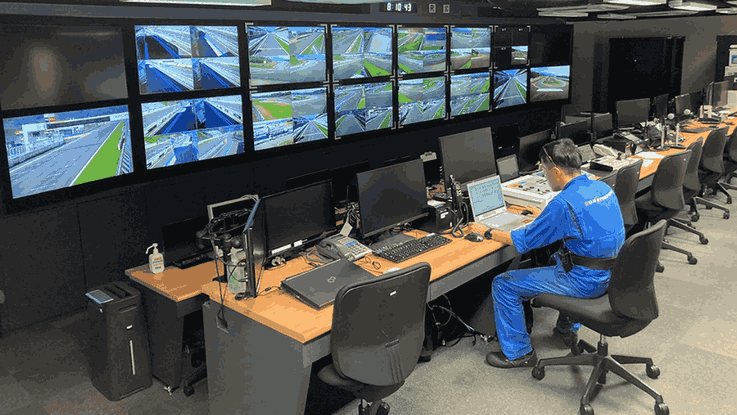
| Track limits | Monitoring, with an FIA remote operations room assisting from 2026 |
| Not race control | Penalties, which belong to the stewards and come with written reasoning |
Responsibilities as described by the FIA and published reporting, checked in October 2026.
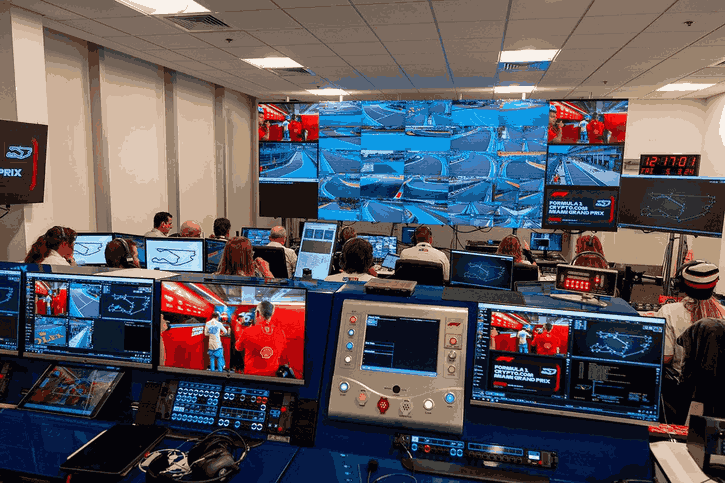
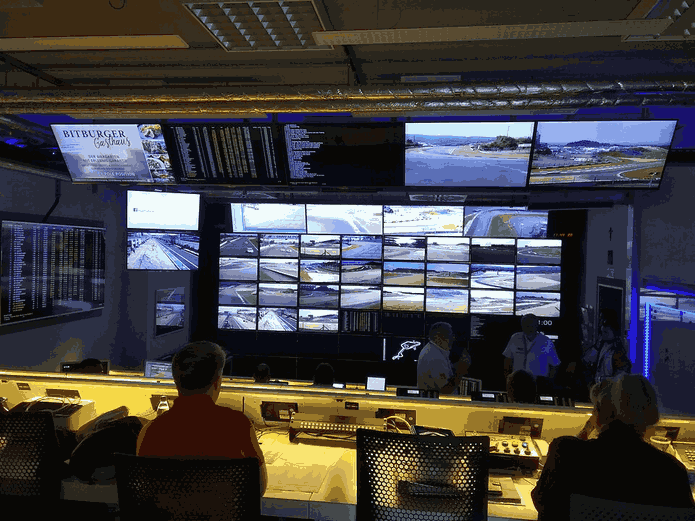
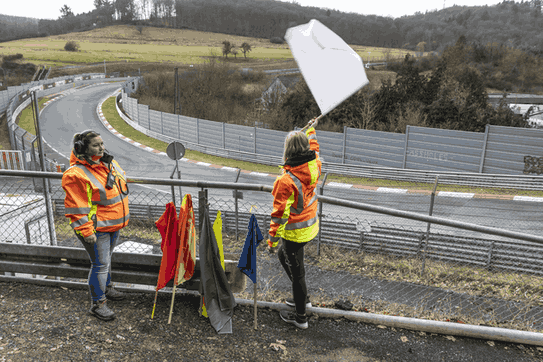
Starting the race on time or holding it. Sending the safety car out and calling it back in. Showing a red flag when a stranded car sits somewhere a two hundred mile an hour field cannot avoid it. Deciding which flags appear at which marshal posts, and managing the several hundred volunteers waving them. From 2026 an FIA remote operations room assists with monitoring track limits, which takes one category of work off a desk that had too much on it.
None of this involves deciding whether somebody drove badly. That belongs to the stewards, and the separation matters more than the paddock usually admits. A red flag is not a penalty. Neither is a safety car, however much it rearranges a race, and neither can be protested afterward in the way a five second penalty can.
Why the two roles get confused
| Race control | The stewards | |
|---|---|---|
| When they act | During the session, in real time | After the incident, on review |
| What they decide | Safety and the running of the event | Whether a driver broke a rule |
| Output | Flags, safety car, red flags, messages | Penalties with written reasoning |
| Can it be appealed | No, these are not penalties | Rarely, and most penalties not at all |
| Who holds it | One race director with a deputy | A panel of four, changing each event |
The division that viewers most often miss. Both sit under the FIA, which is part of why the confusion persists.
There is a second reason, and it is structural. Both roles answer to the same governing body, both appear in the same broadcast graphics, and both are described by commentators as the FIA. A viewer watching a safety car arrive and a five second penalty appear within the same minute has no obvious way to know that two different sets of people made those calls under two different parts of the rulebook.
The people who have held it
Charlie Whiting ran race control for over twenty years, until his unexpected death on the eve of the 2019 season opener. Michael Masi, who had been expected to serve as his deputy, took the job instead and held it until February 2022, when an FIA investigation into the previous year’s Abu Dhabi finale concluded that the regulations had been applied incorrectly and removed him.
What followed was unusual. The FIA split the role between Eduardo Freitas and Niels Wittich, who alternated race by race through 2022, an arrangement nobody repeated. Wittich continued alone until November 2024, when he stepped down with three rounds remaining and Rui Marques took over from the Las Vegas Grand Prix, having arrived from Formula 2 and Formula 3.
What the job looks like in 2026
| Race director | Period |
|---|---|
| Charlie Whiting | More than twenty years, until his death on the eve of the 2019 season |
| Michael Masi | 2019 to February 2022, removed after an FIA investigation into the 2021 Abu Dhabi finale |
| Eduardo Freitas and Niels Wittich | 2022, alternating race by race |
| Niels Wittich | Sole race director from late 2022 until November 2024 |
| Rui Marques | From the 2024 Las Vegas Grand Prix, and still in the role in 2026 |
Sequence of appointments as published. Sources differ on who currently serves as deputy race director, with Claire Dubbelman named for 2025 and Paul Burns for 2026.
The deputy position is worth a note, because published sources do not agree on who currently holds it. Some list Claire Dubbelman, who served as permanent deputy through the 2025 season, and at least one account names Paul Burns for 2026. The FIA has changed this appointment more than once in recent seasons, so the safest statement is that the deputy exists and the name should be checked against the current entry list.
What to watch for
Two habits make a weekend easier to read. When something happens on track, ask whether the response is about safety or about conduct, because the first belongs to race control and the second to the stewards. And when a decision looks slow, remember that the alternative to a considered call is usually an immediate wrong one.
Our clerk of the course called a red flag that April afternoon, and the rain stopped four minutes later. He heard about it for the rest of the season. The scale is different at the top, where the same four seconds can decide a championship and the review afterward runs to a published report. The job is identical. So is the part where everybody else knows better.
Questions about the race director
What does the F1 race director do?
Runs race control during the weekend. That covers the start, the safety car, red flags, the flags shown at marshal posts and the monitoring of track limits.
Who is the F1 race director in 2026?
Rui Marques, who took the role from the 2024 Las Vegas Grand Prix and has held it since.
How is the race director different from the stewards?
The race director acts live and deals with safety and the running of the event. The stewards judge driver conduct afterward and issue penalties with written reasoning.
Why was Michael Masi removed?
An FIA investigation into the 2021 Abu Dhabi Grand Prix concluded that the regulations had been applied incorrectly, and he left the role in February 2022.
Can a race director’s decision be appealed?
No. Safety car deployments, red flags and flag decisions are not penalties, so there is no appeal route of the kind that exists for stewards’ decisions.
Jake Holloway is a club racer, track-day instructor, and motorsports editor based near Charlotte, North Carolina. He has raced karts, Legends cars, Spec Miatas, and amateur endurance cars, and he writes for GreenyCars about how racing actually works, from the rule book to the pit lane.
More Stories
The Dakar Rally and Why Finishing It Counts as Winning
The Ten Greatest F1 Drivers, Ranked by a Club Racer
The F1 Circuits Every Fan Should Know, and What Each One Is For
The F1 Races That Stayed Unsettled Until the End
F1 Driver Nicknames, the Professor to Mr. Saturday