
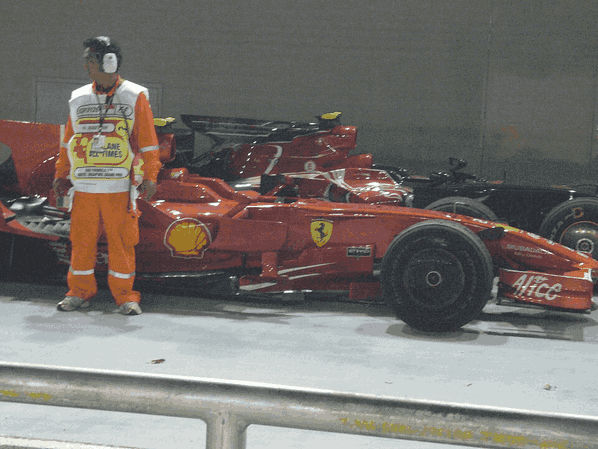
The first time I was impounded after a club race, I stood outside a chalk rectangle for forty minutes while a scrutineer with a flashlight looked at my brake pads. Nobody was allowed to touch anything. My crew chief kept walking to the line and stopping at it, the way you do.
Formula 1 has the same idea, scaled up and moved earlier in the weekend. Saturday afternoon freezes the car, and it stays frozen until the race starts, and the rule governing that is the reason some drivers you see on the grid are not on the grid at all.
Now the confusing part. Some of those breaches are deliberate, a few times a season, and the penalty attached to them has turned into a strategic option. That is worth more of your attention than the list of permitted jobs.
What parc fermé actually is
| The timeline | What happens |
|---|---|
| Parc fermé starts | When a car first leaves the pit lane in qualifying, under Article B3.5.1 |
| If a car never runs in qualifying | It enters parc fermé at the end of Q1 |
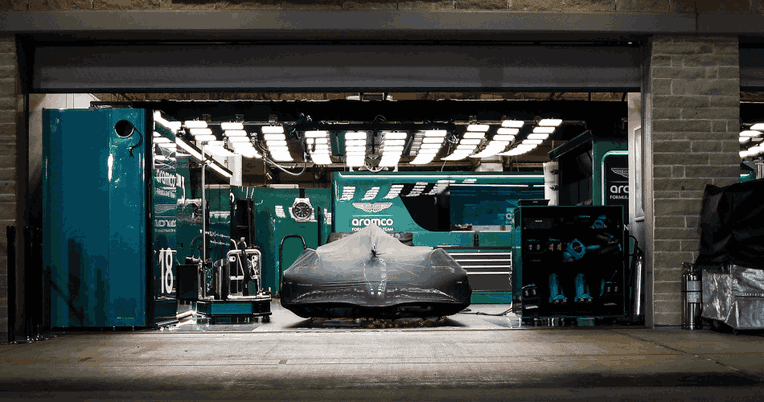
| Overnight | The car is sealed, and any permitted work is supervised by the FIA |
| Parc fermé ends | When the race starts, under Article B3.5.1 |
| On a sprint weekend | Frozen from Sprint Qualifying through the Sprint, then a working window, then frozen again from Grand Prix qualifying |
| Breach before the Sprint | A pit lane start in the Sprint |
| Breach after Grand Prix qualifying | A pit lane start in the race, under Article B3.5.3 |
| Rain Hazard, new for 2026 | Declared no later than two hours before qualifying and holding until the end of the race, allowing work that parc fermé would normally forbid |
Timeline as set out in the 2026 Sporting Regulations. Article numbering changed for 2026, so older explainers cite different ones.
Closed park, in French. Whatever specification a car qualified in, that is the one it races in, frozen by the rulebook until the lights go out on Sunday.
Article B3.5.1 of the 2026 Sporting Regulations fixes the starting moment at the first exit from the pit lane in qualifying. Cars that never run in qualifying are caught at the end of Q1 instead, a detail that matters more than it sounds.
It ends when the race starts. Between those two moments the FIA seals the car and supervises any work carried out on it.
What a team may still do
| Allowed | Costs a pit lane start |
|---|---|
| Change wheels and tires, adjust pressures | Change the suspension setup |
| Drain or add fuel | Change ride height |
| Bleed and de-glaze the brakes | Swap the rear wing or the floor |
| Adjust the front wing flap angle | Fit a part of a different design |
| Repair genuine accident damage | Change power unit elements beyond what is allowed |
| Clean the car, add tape, start the engine | Anything not on the Appendix B2 list |
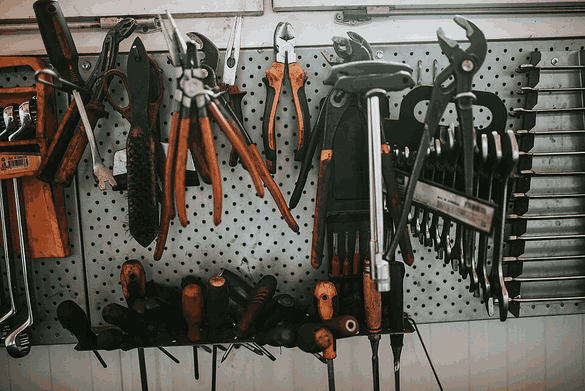
Permitted work from Appendix B2 of the 2026 FIA Formula 1 Sporting Regulations, with the restricted list from Articles B3.4 and B3.5.
One aerodynamic adjustment survives the freeze, and that is the front wing flap angle. Everything else on the aerodynamic side is where it was at the end of qualifying, and that is why engineers on the radio ask for flap changes and never for anything else.
What costs a pit lane start
Suspension setup. Ride height. The rear wing. The floor. Any part of a different design from the one that qualified. Power unit elements beyond what the rules allow.
Change one of those and the driver starts from the pit lane under Article B3.5.3, behind the entire field, after everybody else has gone.
Every team knows in advance what a pit lane start costs them, and a price you can calculate is a price you can argue with. So a bad qualifying session leaves an option on the table for anybody convinced the car itself is wrong. Unlock everything. Build the car you wanted. Start last.
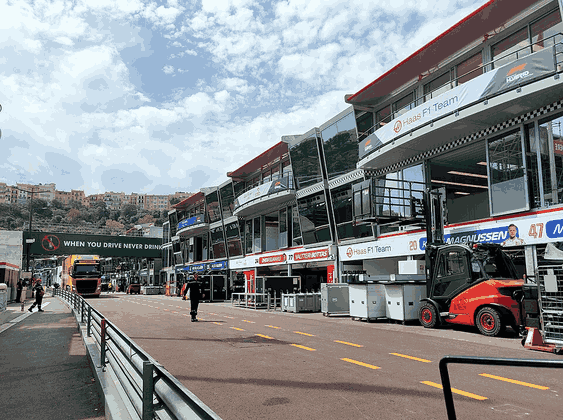
Circuit decides the arithmetic. Somewhere overtaking works, a right car starting last beats a wrong car starting twelfth. At Monaco the same decision ends the weekend.
Two weekends, two freezes
Sprint weekends work differently, and this is where even regular viewers lose track.
The car is frozen from Sprint Qualifying on Friday through the Sprint on Saturday. After the Sprint, teams get a window to unlock and work on it. Then Grand Prix qualifying freezes it again until Sunday.
A breach before the Sprint sends the driver to the pit lane for the Sprint. One after Grand Prix qualifying sends him there for the race. The two freezes are judged independently, which leaves room for a driver to serve a pit lane start on Saturday and keep his grid slot on Sunday.
The 2026 rain exception
This is new, and it exists because of the current cars.
Under the Rain Hazard provision, a team can be allowed to carry out work normally forbidden under parc fermé if wet conditions are declared. The declaration has to come no later than two hours before qualifying starts, and the one declared for the race holds until the end of the race. A sprint weekend needs its own declaration, made before Sprint Qualifying.
The timing points to the active aerodynamics on the current cars. A car set up for a dry qualifying session and sent into a wet race is a worse problem now than it used to be, and the alternative was watching half the field take pit lane starts every time a forecast changed.
When the rule decided the weekend
Quietly, in most cases, and nobody writes those up.
Seventh in qualifying. Something fails overnight. A part goes on that is not on the list, and Sunday starts from the pit lane instead of the grid. Commentary covers that once before the formation lap and drops it. By lap ten he is fifteenth and the reason looks like pace.
The deliberate ones are the interesting half. A team looks at a Saturday result, decides the car is unsalvageable in that configuration, and spends Saturday night rebuilding it knowing the driver starts last. That is not a mistake being punished. It is a bet being placed.
My chalk rectangle at that club race held one car and a scrutineer with a flashlight. The principle has not changed on the way up. Whatever you brought to qualifying is what you race, and if you want a different car, you pay for it at the start.
Questions about parc fermé
What does parc fermé mean?
Closed park, in French. In Formula 1 it is the period when a car is locked into the specification it qualified in, and teams may only carry out work from a published list.
Can a team change the setup after qualifying?
Not without consequence. Suspension, ride height, rear wing and floor are all frozen. The front wing flap angle is the one adjustment that remains available.
Why do cars start from the pit lane because of parc fermé?
Because that is the penalty for working outside the permitted list. Teams sometimes accept it deliberately, unlocking the car to build the setup they wanted and giving up their grid position in exchange.
When does parc fermé start and end?
It starts when a car first leaves the pit lane in qualifying and ends when the race starts. On a sprint weekend the car is frozen twice, with a working window after the Sprint.
What is the Rain Hazard rule?
A 2026 provision that lets teams carry out otherwise forbidden work when wet conditions are declared, no later than two hours before qualifying, with the race declaration holding until the end of the race. It exists largely because of the active aerodynamics on the current cars.
Jake Holloway is a club racer, track-day instructor, and motorsports editor based near Charlotte, North Carolina. He has raced karts, Legends cars, Spec Miatas, and amateur endurance cars, and he writes for GreenyCars about how racing actually works, from the rule book to the pit lane.
More Stories
The Dakar Rally and Why Finishing It Counts as Winning
The Ten Greatest F1 Drivers, Ranked by a Club Racer
The F1 Circuits Every Fan Should Know, and What Each One Is For
The F1 Races That Stayed Unsettled Until the End
F1 Driver Nicknames, the Professor to Mr. Saturday