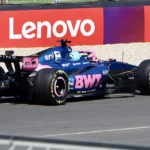
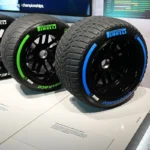
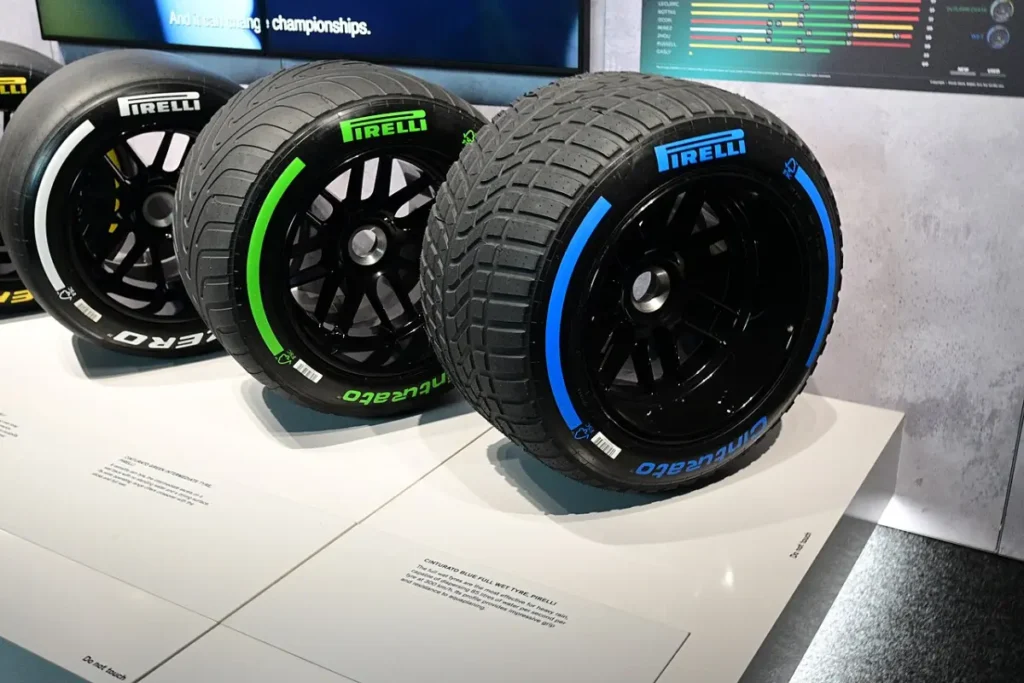
The drivers did not like the rain tires in Brazil, and Pirelli now plans a change. Interlagos had the first really wet weekend of this season. It rained in qualifying, and it rained in the race. After the race many drivers criticized the intermediate and the full wet. Pirelli motorsport director Dario Marrafuschi told The Race that both tires will be different in 2027.
“Tyre development is going ahead and we have a different spec for next year,” Marrafuschi said. The main work is on the intermediate. Pirelli wants this tire to reach its working temperature faster. “Some of the drivers were complaining about warm-up, so we have been working for next year on the warm-up phase, on the intermediates,” he added. The FIA will homologate the new designs in December. Pirelli will share more details after that.
The drivers were very direct. Carlos Sainz of Williams said that “the level of the wet and the inter is not good enough and we need to work with Pirelli on finding a better tyre.” He felt that the intermediate was weak at the rear in mixed conditions. He also missed rear grip on the full wet. Pierre Gasly of Alpine said the inters “feel very poor” and have “extremely poor grip”. He compared his last stint to a drive on ice. Ollie Bearman of Haas called the tire “very stiff, very hard to warm up”. Alex Albon said that his tires never reached the right temperature. Liam Lawson blamed the cold, and he said the cars were “nearly undriveable” on the laps to the grid.
Pirelli did not forget how to make a rain tire. The 2026 rules created the problem. The new cars have a straight mode and a corner mode, and both modes put bigger forces on the tires. Pirelli also had to prepare for a failure of the active aero. In that case a car could go down a straight with full downforce. So Pirelli made the intermediate more robust. A more robust tire is also stiffer, and a stiff tire works badly in cold and wet conditions.
The pressures also went up. In Brazil the minimum front pressure on the intermediate was 28 psi. Last year the number was 25.5 psi. On the full wet the front minimum went from 22 psi to 26.5 psi. Higher pressure and a stiffer construction reduce the movement of the tire under load. The tire then makes less heat, and the drivers feel it right away.
George Russell gave a calmer view. He said that this year’s wet races came on rough tracks. These tracks stayed quite warm even in the rain, and the track in Brazil had around 30 degrees in qualifying. Russell thinks that a colder track like Spa could give a different result. Marrafuschi also mentioned Lewis Hamilton. In his words, Hamilton had “zero warm-up problems at all” at the start of the race in Brazil. Some cars, drivers and set-ups simply work better in some conditions, Marrafuschi said.
The new spec is not a sign of failure, according to Pirelli. “It doesn’t mean we are not satisfied with this year’s specs because we had very good racing in Malaysia, in Singapore and in Brazil as well,” Marrafuschi said. He added that “an optimisation can be done”.
Pirelli also had problems with testing this year. The company planned a wet test in Bahrain in February, on an artificially soaked track. The test was canceled after the Iran war began, so Pirelli did its wet running during the season.
Nothing will change for the last three rounds, so if rain arrives in Las Vegas, Qatar or Abu Dhabi the drivers will be stuck with the current intermediates, and a wet session on a chilly desert night in Las Vegas would be quite the examination. From 2027 onward, provided the December homologation goes to plan, the green-walled tire should be a little easier to bring to life.
More Stories
Otro Capital Hires Bankers to Sell Its Alpine Stake
Lawson and Lindblad Get Another Year at Racing Bulls
The Formula 2 Title Will Now Be Settled on Track
Vowles Says Williams Got Carried Away and Calls the Season a Blip
Hirakawa Waits Alongside Camara as Haas Leaves the Vegas Seat Open