PexelsThere is a turn at a particular part of Road Atlanta where the road suddenly disappears from underneath the car at the exact same moment when the steering wheel becomes heavier. I have spent two seasons trying to figure out what is the right thing to do there and coming up with the idea about the lift. It was a mistake, as it turned out. What really mattered there was commitment, while it was only doubts that I had in my mind when I tried to figure it out. It also happens that there is no possible combination slower than that in racing.
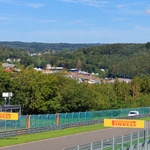
The same problem exists at Spa-Francorchamps but on a larger scale. The figures are in the table below, and they might take you a minute to analyze, but the figures nevertheless do not explain why men get so emotional about this corner found in the Ardennes. I have never been on this corner, and I have always wished to drive on it since I was nineteen.
Spa at a glance
| Fact | Detail |
|---|---|
| Lap length | 7.004 km, or 4.352 miles, the longest on the calendar |
| Corners | 19 |
| Race distance | 44 laps, 308.052 km, or 191.4 miles |
| Elevation change | 102 meters, from Stavelot up to Les Combes at 470 meters |
| Lap record | 1:44.701, Sergio Perez, 2024 |
| Unofficial best | 1:40.510, Oscar Piastri, sprint qualifying 2025 |
| First world championship race | 1950 |
| Grands Prix at Spa | 59, counting the 2026 race |
| Most driver wins at Spa | Michael Schumacher, 6 |
| Calendar status | Contracted through 2031, run in 2026, 2027, 2029 and 2031, with no race in 2028 or 2030 |
| Low drag zones for 2026 | Five, matched this season only by Albert Park |
Compiled from the Formula 1 circuit guide, ESPN race data and the 2025 calendar announcement, checked in September 2026.
In that table, two statistics are more valuable than any others. The lap is the longest one on the calendar, and the road rises 102 meters while being driven through, which seems incredible for an observer who has not done it yet.
I have walked hills at American tracks with the bag and the camera hanging in one shoulder, so I am used to photographs that make them flat. Raidillon looks quite plain on TV. Friends who have been at its bottom come back and talk about it like climbers do, and you can tell they are not embellishing the story.
The road it used to be
| Year | What changed |
|---|---|
| 1921 | Circuit traced over public roads between Francorchamps, Malmedy and Stavelot, close to 15 km |
| 1950 | First world championship Belgian Grand Prix held here |
| 1969 | Drivers boycott the Grand Prix over the safety of the long circuit |
| 1970 | Race run with more guardrails, and it is the last Grand Prix on the full circuit |
| 1970s | Belgian Grand Prix moves to Nivelles and Zolder, twelve races between them |
| 1979 | Layout cut roughly in half, with a new infield section through the woods |
| 1983 | Formula 1 returns to the shortened circuit that is still in use |
| Since | Length adjusted by kink modifications rather than redesigns |
History compiled from circuit records and race archives. Zolder hosted ten Belgian Grands Prix and Nivelles two, which is why race counts differ between sources.
The first circuit here was not built at all. It was traced over roads that already connected three Belgian towns, and the loop came out longer than the drive from my house to the shop where my Miata sat all winter.
Every club racer has driven a road like that on the way to a track, thought about what it would be at racing speed, and then thought better of it. For four decades Belgium did not think better of it. The dates are in the second table, and what they describe is a slow argument between speed and survivability which survivability eventually won.
What is left today is a hybrid. Half of this lap came off a drawing board. The other half is still the road to Malmedy, and it behaves like one, which is the part that makes engineers uncomfortable and everybody else happy.
The corners that decide it
Pexels| Corner | What it asks of a driver |
|---|---|
| La Source | A slow hairpin with the whole field arriving together on lap one |
| Eau Rouge and Raidillon | Compression at the bottom, a blind crest at the top, flat in the dry |
| Kemmel straight | Nearly a kilometer, and the best overtaking place on the lap |
| Les Combes | Braking from about 327 km/h, or 203 mph, down to about 176 km/h, or 109 mph |
| Malmedy and Rivage | The lap turns back downhill and the rhythm changes |
| Pouhon | A double-apex left at high speed with sustained lateral load |
| Stavelot | The lowest point of the circuit, and the run to Blanchimont starts here |
| Blanchimont | Flat in a modern car, and it does not feel like it should be |
| Bus Stop | The last chance to pass before the line |
Corner speeds as reported in circuit analysis for the 2026 season; one analysis counts eight corners taken above 250 km/h. Figures vary with car, fuel load and conditions.
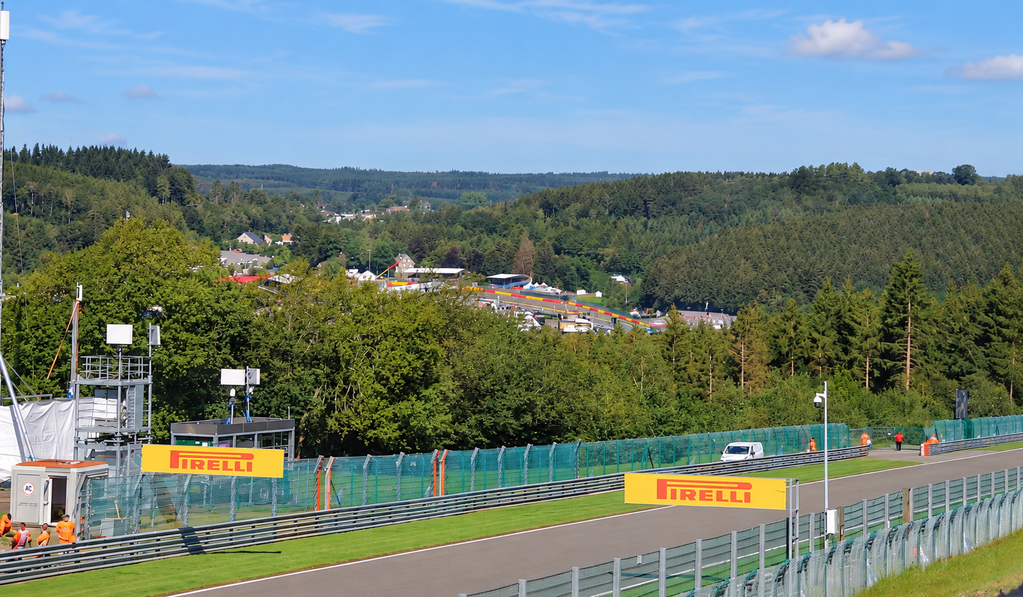
Eau Rouge and Raidillon get the attention, and they deserve some of it, though not for the reason people assume. Modern cars take the sequence flat in the dry. Finding the grip is not the difficult part. Deciding that it will be there, at the bottom of a valley with the car heavy and the view gone, is.
That is the same decision I kept failing to make at Road Atlanta, scaled up by a factor I will never personally experience. My version came with a heart rate I could hear. Theirs comes with a steering wheel that weighs more at the bottom of the hill than it did at the top.
Pouhon is the one drivers pick when somebody makes them choose. A long double-apex left, with the load sitting on the tires far longer than feels reasonable, and from the viewing area the speed simply refuses to look real. People hold up a phone at it, as though a camera would settle the argument, and then put the phone away and just watch. I would do the same.
The rest of the lap is in the corner table. Two things in it are worth knowing before a race: Kemmel is where the passing happens, and the Bus Stop is where a driver who has been chasing for a lap either gets it done or starts over.
Weather that writes its own strategy
The distance of seven km suffices for experiencing two distinct weather conditions. A driver can enter the track on dry tires and 90 seconds later find himself on a wet section of the track where it has been raining since the driver went out. No one warns him beforehand regarding it. The engineer is just looking at the same radar screen and interpreting it.
One afternoon, we witnessed the change from dry to standing water conditions in Roebling Road in a matter of just four minutes. I clearly remember the sound of raindrops hitting the roof of our trailer. There were three of us in the trailer who had spent the previous hour trying to find out whether it makes any sense to change a pound and a half in tire pressure based on the various data we gathered regarding this issue.
Races nobody has finished arguing about
| Race | What happened |
|---|---|
| 1998 | Rain at the start and thirteen cars wrecked at La Source on the opening lap |
| 2000 | Mika Hakkinen passes Michael Schumacher around the outside at Les Combes, with a backmarker between them |
| 2008 | Hamilton and Raikkonen fight in worsening rain, and a penalty after the flag decides it |
| 2021 | Two laps behind the safety car, a red flag and half points, for 6.880 km of racing |
Race records from official classifications. The 2021 event remains the shortest world championship Grand Prix ever held.
Whenever this place is referred to, the mention of four races usually follows, and with each race comes forth an argument associated with it. Organizations view some races as valid while others see no significance in them.
The race I personally experienced was the one in 2021. I prepared myself for the race and took a notebook and a pen with me. However, I did not get a chance to note down anything because nothing interesting happened, two laps under the safety car, red flags in the end, and half points given to the racers. My coffee on the table got cold when there was nothing to write down. The one in 2021 is the unfortunate titleholder of the shortest World Champion Grand Prix in the history of the races.
Arguments from the 2008 race keep attracting attention till today. The penalty imposed for the actions informs people’s discussions about the race that they take part in. I have had that argument in a paddock, twice, with the same man.
If you are going
Pexels| Going to Spa | Detail |
|---|---|
| Best ticket | General admission, for the viewing banks it opens up |
| Where to watch | The hillside above Eau Rouge and Raidillon, the banking at Les Combes, the viewing area at Pouhon |
| Getting there | Driving, from Liege in about an hour or Brussels in about two |
| Staying | Campsites around the circuit, booked far in advance |
| Prices | Lower than most Grands Prix, though they move every season; check the official ticket page |
| What to bring | Rain gear, walking shoes and ear protection, since the site is large and hilly |
Practical details for the Belgian Grand Prix weekend. Ticket prices change each season and were not verified for this guide.
Three things are worth knowing before you book anything. General admission beats most grandstand seats here. A car is how you get to the circuit. And the walking, on a site this size, is longer than the map lets on, which I say as a man who has ruined a good pair of shoes at Road America doing exactly that.
What that ticket buys here is not on offer at most circuits. Standing above Eau Rouge you watch cars go over the crest and disappear, and no camera angle has ever conveyed that properly. Fifteen minutes of walking later you are at Les Combes with braking and a chicane in one eyeline.
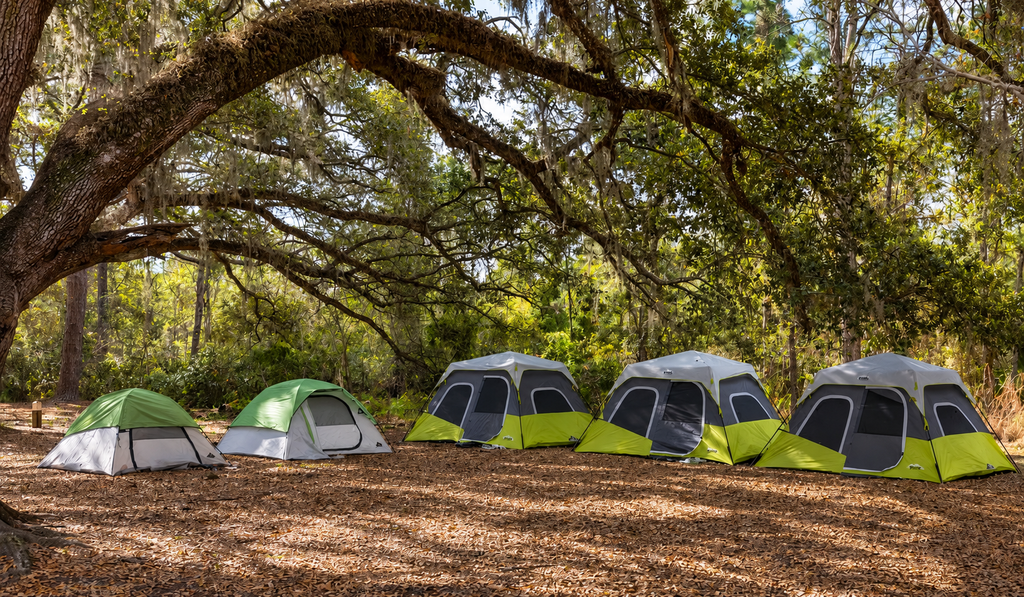
Camping is part of the weekend here rather than a way to save money, the same as at the Red Bull Ring. Somebody is always cooking something at seven in the morning. People go back to the same field for twenty years and set up in the same corner of it. The same thing happens in club paddocks, down to the arguments about who was there first, and I grew up inside those arguments.
What the place asks
Commitment in this case will bring rewards in ways that most modern venues don’t seem to care about much anymore. Fast corners are fast enough to register a fraction of doubt in the hitherto moments, and what happens when one goes wrong can easily be observed from the grandstands. In other circuits, you get gravel, a worthless lap, and a long walk to the pit.
This makes me go back to the esses of Road Atlanta. I had been lifting there for two seasons now thinking that the car was begging me to do so. But actually, the car was not demanding anything at that moment. It was simply going to wait until a decision is made. The morning I finally kept my foot down, I found the corner no longer spooky and able to give me back three tenths per lap.
Nineteen times a lap, the question is put before people at Spa and the correct answer makes millions of dollars. Nevertheless, they still name it their favorite circuit year after year, which says a lot about racing drivers. And about the rest of us, standing in the rain with a cold sandwich watching someone else being brave.
What readers ask about Spa
7.004 kilometers, or 4.352 miles, which makes it the longest circuit on the Formula 1 calendar.
Nineteen, with 102 meters of elevation change between the lowest and highest points.
In a dry modern Formula 1 car, yes. The difficulty is committing to it, not finding the grip.
The lap is seven kilometers long and runs through an Ardennes valley, so the two halves can sit under different weather.
A minute, 44.701 seconds, set by Sergio Perez in 2024. Qualifying laps are quicker, since the record counts race laps only.
A contract signed in January 2025 keeps the Belgian Grand Prix on the schedule through 2031, but the race rotates. It runs in 2026, 2027, 2029 and 2031, and there is no Belgian Grand Prix in 2028 or 2030.
Jake Holloway is a club racer, track-day instructor, and motorsports editor based near Charlotte, North Carolina. He has raced karts, Legends cars, Spec Miatas, and amateur endurance cars, and he writes for GreenyCars about how racing actually works, from the rule book to the pit lane.
More Stories
How to Become an F1 Driver When Karting Is Only the First Step
The F1 Power Unit Explained and Why the Lap Is Now an Energy Budget
F1 Driver Salaries and What the Reported Numbers Actually Mean
F1 Pit Stops Explained With the Records, the Technique and the Strategy
How an F1 Race Weekend Works From Friday Practice to Sunday’s Race