

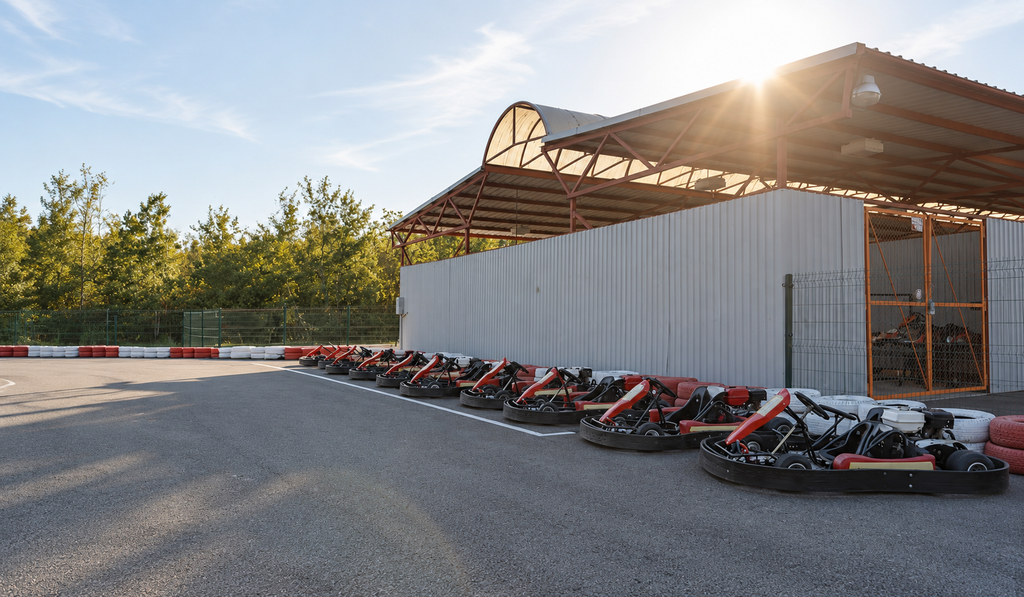
PexelsJust the other day during a track day, I was asked the same question which I’m used to hearing multiple times during the season. A father of a ten year old, quick in karts, opened his notepad before I managed to get hold of my cup of coffee. What he wanted from me was a simple list of steps on how to get to Formula 1. Honestly, it would take me a minute to answer this question, but nobody likes to hear it and the father usually puts his notepad back in his pocket somewhere in the middle of my explanation.
Tens of thousands of children race karts seriously around the world. Something in the region of two hundred hold a seat on the FIA single-seater ladder at any moment. One to three rookie seats are opened in Formula 1 in a normal year. Everything in between is made of talent, money, timing and a license points table which most spectators have never read. The below-mentioned norms sourced from the FIA Super Licence regulations and the prices come from calculations provided by Speedcafe, Motorsport Week and various team breakdowns.
The ladder must be taken step by step
The journey commences with karting, as it is the first step in the rookie racers career. And most serious young racers start racing already at the age of seven or eight. Consequently the clock is running long before anybody knows whether the youngster is any good at all. People give no warning to a family when it comes to this specific detail, and this is the first omission out of many.
Vehicles show up at around fifteen, in Formula 4, which is about the age I was borrowing dad’s tools without asking. Then a regional championship has to be attempted, and then FIA Formula 3, and then Formula 2. Each stage requires two seasons of involvement: one for learning the series and the second for winning at it. Staying at any stage longer than that is read by the decision-makers as a bad sign rather than as patience. It seems less than fair until you count the drivers waiting in line.
My ladder of success had three levels, and I stalled at the second. It all started at age twelve with karts, moving on to Legends cars at age twenty and to Spec Miata after that.
I acquired my own kart from a trailer in someone’s backyard, and it was paid for with money earned behind the counter of an auto parts shop. I have a better recollection of the scent of the shop than of the kart and know better what the cost of entering races does to a paycheck.
The license is based on mathematics rather than opinions
| Step | Typical age | Cost per season |
|---|---|---|
| Karting | 7 to 15 | 50,000 to 100,000 dollars, more at world level |
| Formula 4 | 15 to 17 | 200,000 to 300,000 dollars |
| Formula Regional or FIA F3 | 17 to 19 | 800,000 to 1.2 million dollars |
| Formula 2 | 19 to 22 | 2 to 3 million dollars, usually for two seasons |
Estimates published by Speedcafe, Motorsport Week and f1salaries.com. A clean run from Formula 4 to a second Formula 2 season is put above 16 million dollars.
Now we get to the part the father with the notepad never knew, which decides most of everything else.
A driver may not be entered in a Formula 1 session without a Super Licence. Eligibility is built upon forty license points, accumulated across the three preceding seasons. A driver also has to complete eighty percent of two full seasons in listed championships. A competition license of International Grade A is necessary, and as a prerequisite, the theory examination based on the sporting codes must be completed. Even though the minimum age required to take part at the first event is eighteen years, as of 2024 the age requirement can be lowered to seventeen for a driver judged to have shown outstanding ability and maturity. Arvid Lindblad came through that door two months before his eighteenth birthday. Antonelli used the same clause a year earlier, for Friday practice only.
The points are awarded for finishing positions, and the scale of them is steep. You have the possibility to earn all forty points in a year by winning Formula 2 events. A win in Formula 3 only nets thirty points, which leaves a driver a year short of the licence and explains a great many career decisions that look paradoxical from outside. However, a point per Grand Prix weekend can also be collected for completing a hundred kilometers in a Friday practice session, bearing in mind that this route is capped at ten. It is interesting that I keep this point earning chart in the folder where I store my licenses data, which says a lot about my spendings in winters.
So, it seems the Friday exercises which I see as a publicity stunt, are something else entirely. In this case, someone is paying for a license and the team incurs the cost of using time on the track for that purpose. Once that is clear, the camera shot suddenly turns into an accounting entry instead of a sponsored exercise.
I explained this to one reader via email but all I got in reply was three paragraphs on how sports are fixed.
The bill that nobody puts on the poster

Pexels| Requirement | Detail |
|---|---|
| License points | 40 across the three preceding seasons |
| Seasons completed | At least 80 percent of two full seasons in listed championships |
| Competition license | International Grade A |
| Test | Theory exam on the FIA sporting code |
| Age | 18 at the first event, with a discretionary exception at 17 since 2024 |
| Formula 2 title | Worth the full 40 points |
| Formula 3 title | Worth 30 points |
| Friday practice | One point per event for 100 km completed, capped at ten |
Source: FIA Super Licence regulations, Supplement 1, as published for 2026.
The people tend to talk less about the money aspect of the project despite its dominance. In fact, there are such unexpected figures that no family ever imagines when planning the budget for the season. I had this talk several times already, even in the field while holding a cup of cold coffee in my hand.
The season of competitive karting costs at least fifty and probably up to a hundred thousand dollars, including appliances, traveling costs, coaching fees, and entry fees. A world championship program costs significantly more than that. Formula 4 runs at somewhere between two and three hundred thousand dollars, and Formula 3 sits close to a million. Formula 2 costs two to three million a season, and most drivers need two of those.
Speedcafe added the whole thing up a couple of years ago. A clean run from Formula 4 at fifteen to a second Formula 2 season at twenty one was estimated at over sixteen million dollars. This amount is predicated on the assumption that everything will go well, which is hardly the case in this sport of uncertain results.
During the early 2000s I came across one such anecdote. There was a young racer in our area, the best at the local level. His father spent all his time and money keeping the kart running, and after two seasons the arithmetic won. The talent never ran out; the money did, which is the ordinary ending rather than the dramatic one.
I had a mother of one of my students asking me the question in a yard together with her husband, whether selling the house will be enough to take her son to Formula 3. I told her no and had to explain why. This conversation is the reason why this article contains numbers.
What an academy is actually buying
Academy is the reason why manufacturers’ schools are so important. It also provides the explanation of why the age of signing keeps dropping. Antonelli joined the program of Mercedes at the age of twelve and it doesn’t sound like a good idea until you see the earlier bill.
What the academy does is that it helps in financing part of the ladder. It also offers engineering help and simulator time. The academy also gives the driver a possibility to get access to people who make final decisions. This can also be the reason why some drivers are sent to second or third tier teams to gain experience.
Why most careers end without a crash
Nobody on that ladder goes out because of a single bad race. Careers end in slower and quieter ways than that. The budget for next season does not come together. The academy will sign a younger individual. A rung takes around three years instead of the usual two, and later on it looks as though nobody ever made a decision about the case at all.
I think about this very aspect which I’ve learnt from club racing. At club racing, risks are lower, but everything else is quite similar. But it’s not only about talent – money, timing, training, equipment, the year of birth of the racer, and the right moment when some important person appeared in the life of the rookie matter as well. Anybody who explains a career with the phrase wanted it more has left out most of the story, and usually the expensive parts of it.
What I told the father with the notepad
Karting comes first, because there is no substitute for race craft learned at ten years old against other ten year olds. Let the child stay in it for as long as it remains enjoyable, and be honest about the moment when it stops being so. This has happened to us on more occasions than one, and usually, the family involved in the activity turns out to be the last one to notice.
The next step is practical. Find out how much a season costs before it starts. It is essential to familiarize yourself with the license point table at an early stage because it will give you an idea of which competitions you are eligible for.
Back at the track day
He took the majority of notes, which I found surprising, and proceeded to ask the usual question: what are the chances?
I told him honestly that I could not tell the answer because the real question is different. It is not about whether his son will make it to Formula 1, it is about whether the ten years of getting there are worth it in and of themselves. Many of us spent such years and landed somewhere else in racing altogether, still at the track on a Saturday morning, still arguing about tire pressure with those we have known for twenty years. The guy who was fastest of us all at the track is now an engine builder. He seems very happy about it, which is the kind of ending no one will ever write an article about.
Questions I get from parents
A Super Licence. That means 40 license points over three seasons, 80 percent of two full junior seasons, a Grade A competition license, a theory test and an age of 18, with a rare exception at 17.
All 40 of them, in one season. The Formula 3 title is worth 30.
Estimates for a clean run from Formula 4 to a second Formula 2 season start above sixteen million dollars, and most careers are not clean runs.
It happens, though rarely. An academy covers part of the budget and puts a driver in front of the people who pick, which is hard to replace with results alone.
Jake Holloway is a club racer, track-day instructor, and motorsports editor based near Charlotte, North Carolina. He has raced karts, Legends cars, Spec Miatas, and amateur endurance cars, and he writes for GreenyCars about how racing actually works, from the rule book to the pit lane.
More Stories
The F1 Power Unit Explained and Why the Lap Is Now an Energy Budget
F1 Driver Salaries and What the Reported Numbers Actually Mean
Spa-Francorchamps Circuit Guide to the Track Drivers Respect Most
F1 Pit Stops Explained With the Records, the Technique and the Strategy
How an F1 Race Weekend Works From Friday Practice to Sunday’s Race