Our best pit stop in club endurance racing took fifty eight seconds. Fuel, driver change, film off the windshield, go. We practiced in a parking lot until the guy on the belts could do it blindfolded. At Roebling Road one July we executed it perfectly. We still lost two positions.
The stop was not the problem. We had called it a lap too late, and the car in front got the clean track we were supposed to get.
That is the part of Formula 1 pit stops nobody puts on the highlight reel. The two seconds are astonishing and they are also the easy part. What decides the race is when the call goes out, and what the driver finds when he rejoins. Rules below come from the FIA 2026 Sporting Regulations, times and records from Formula 1 and the DHL pit stop award.
What actually happens in those two seconds
Around twenty people work a Formula 1 stop, and most of them touch the car for less than a second and a half.
Three per corner, two on the jacks, two on the wings, several more watching and covering. The car arrives on its marks. Four guns run in parallel, the jacks drop, and a light tells the driver to go. Nobody refuels. That went away after 2009, which is why a modern stop is a tire change and nothing else.
~20
people work the stop
3
per corner
2
on the jacks
2
on the wings
The measured time is stationary time only. It starts when the car stops moving and ends when it moves again. The figure on television is a fraction of what the stop really costs.
The record, and the price of chasing it
The fastest stops, and this season for comparison
| Stop | Team and driver | Time |
|---|---|---|
| Qatar 2023 | McLaren, Lando Norris | 1.80 seconds, the record |
| Brazil 2019 | Red Bull, Max Verstappen | 1.82 seconds |
| Azerbaijan 2016 | Williams, Felipe Massa | 1.92 seconds |
| Spain 2026 | McLaren, Oscar Piastri | 2.13 seconds, fastest of that weekend |
| Australia 2026 | Mercedes, George Russell | 2.17 seconds, fastest of that weekend |
| Stationary time only. Sources: Formula 1 and the DHL Fastest Pit Stop Award. | ||
Stationary time only. Sources: Formula 1 and the DHL Fastest Pit Stop Award.
Nobody has gone under 1.80 seconds since Qatar in 2023, where Lando Norris came in and left again before most people had finished a sentence. Red Bull owned the mark before that at 1.82. Williams held it at 1.92.
Progress in this area has slowed to almost nothing. A tenth over a decade, roughly, and each new tenth costs more risk than the last.
This season the quick stops have settled a little higher. Mercedes managed 2.17 seconds in Australia. McLaren did 2.13 in Barcelona for Oscar Piastri. Ferrari took the DHL award for 2025 on consistency rather than one showpiece stop.
Chasing a record has a failure mode, and it is expensive. A gun that does not seat costs three seconds. A cross threaded nut costs a race.
A GUN THAT DOES NOT SEAT
Three seconds gone.
A CROSS THREADED NUT
The race gone.
The clock that matters runs longer
The rules around a pit stop in 2026
| Rule | Detail |
|---|---|
| Refuelling | Banned after the 2009 season |
| Tire specifications | At least two different dry specifications in a dry race, one of them a mandatory race specification |
| Pit lane speed | 80 kilometers an hour |
| Monaco | The 2025 three-set rule that forced two stops was removed for 2026 |
| Unsafe release | Penalty for the team and the driver, decided by the stewards |
| Source: FIA 2026 Formula 1 Sporting Regulations, Issue 08, and FIA rule changes for 2026. | |
Source: FIA 2026 Formula 1 Sporting Regulations, Issue 08, and FIA rule changes for 2026.
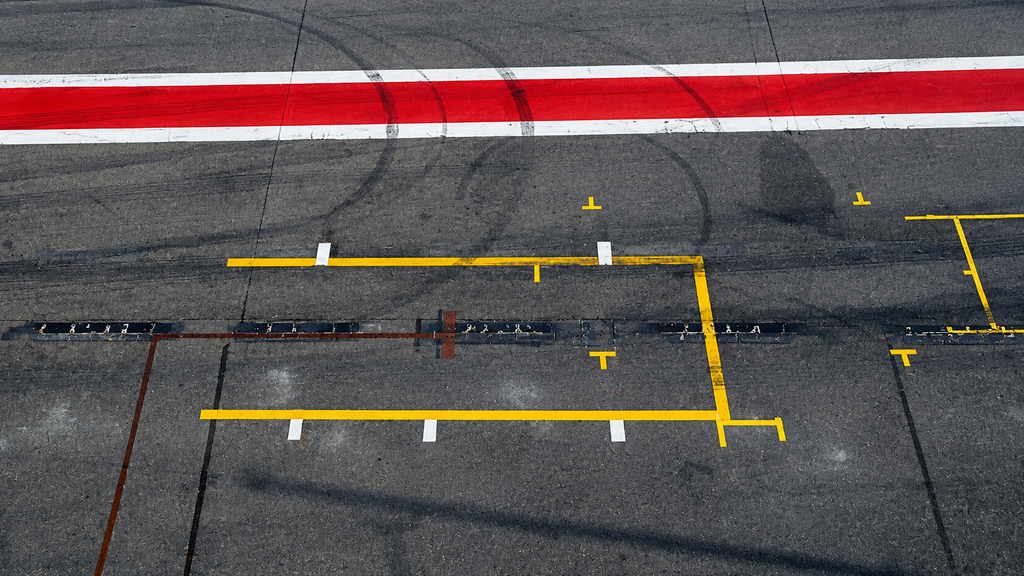
The limit through the pit lane is 80 kilometers an hour, and the lane runs a long way. Entry, the slow trip past the garages, the stop itself, then the exit. Across a season the real cost of a visit lands somewhere near twenty seconds.
~2 s
what the television shows
~20 s
what a visit really costs
80 km/h
the pit lane limit
Which is why the decision matters more than the wheel guns. Twenty seconds against a driver who stays out is a gamble on tire life, traffic and whatever the safety car does next.
Strategy people talk about the undercut, stopping early to use fresh rubber on clear track. The overcut is the opposite, staying out while the other car loses time in the lane and on cold tires. Both work. Both fail. Traffic usually decides which.
UNDERCUT
Stop early and use fresh rubber on clear track.
OVERCUT
Stay out while the other car loses time in the lane and on cold tires.
Why anybody stops at all
The rules require it in dry conditions. Each driver must use at least two different specifications of dry-weather tires during a race, at least one of them a mandatory race specification. A dry Grand Prix cannot be run on one set.
Monaco got an experiment in 2025. Drivers had to use three sets and therefore stop twice. Teams gamed it by slowing the field for a teammate, the racing did not improve, and the clause was struck out of the 2026 rules.
DRY RACE
At least two different dry specifications, one of them a mandatory race specification.
MONACO 2025
Three sets and two stops. Removed for 2026.
Everything else is degradation. A tire gives up its best work in the first stint and then starts sliding, and the team is deciding when the sliding costs more than twenty seconds in the pit lane.
Where stops go wrong
Two ways, mostly. The crew releases a car into the path of another one, which brings a penalty, or a wheel goes on wrong and the car is stopped for safety.
Both of those happen in front of a camera pointed at the mechanics, which is unfair. The crew is executing a plan under a clock somebody else set.
I have had my own version. During an eight hour race I fumbled a belt buckle in the driver change and cost us fourteen seconds. Nobody said anything about it afterwards, which was worse than if they had.
Every season somebody emails me asking whether an F1 crew would beat a NASCAR crew. Different job, different tools, and the NASCAR guys are carrying fuel cans and a lug wrench while ours are not carrying anything at all. I have stopped answering, mostly because both sides of that argument arrive with charts.
What I watch during a stop
The pit wall, when the broadcast allows it. The decision is visible several laps before the stop, in whether a team is bringing the driver into traffic or into space.
Then the exit, because that is where the twenty seconds are settled. A car that rejoins behind a train has lost more than a slow gun would have cost.
And the lap after, which tells you whether the new tires were the right ones.
One more thing, and it has nothing to do with strategy. The best thing I have seen in a pit lane was a crew at a club enduro that kept a folding chair for their driver’s mother, set up between the timing stand and the wall, with a cooler next to it. She sat there for six hours and called out lap times that were wrong by about four seconds, and nobody corrected her once.
Back at Roebling Road
Our fifty eight second stop is still the best one that crew ever did. It also went in the notebook under a bad result, because the decision that framed it was wrong by one lap.
Formula 1 crews have taken the same job down to under two seconds, and the arithmetic has not changed. The stop is a craft. The call is the race.
Questions I get about pit stops
How fast is an F1 pit stop?
Quick ones this season sit a little over two seconds. Nothing has gone quicker than 1.80, a number McLaren set three seasons back.
How big is the crew that does the stop?
Around twenty, with three at each corner and more on the jacks, wings and safety duties.
When did refuelling stop in F1?
After the 2009 season, on cost and safety grounds. A modern stop changes tires and nothing else.
What does a stop really cost in race time?
Roughly twenty seconds at most circuits once the entry, the speed limit and the exit are counted. That is why the timing of the call matters more than the stationary time.
More Stories
How to Become an F1 Driver When Karting Is Only the First Step
The F1 Power Unit Explained and Why the Lap Is Now an Energy Budget
F1 Driver Salaries and What the Reported Numbers Actually Mean
Spa-Francorchamps Circuit Guide to the Track Drivers Respect Most
How an F1 Race Weekend Works From Friday Practice to Sunday’s Race