
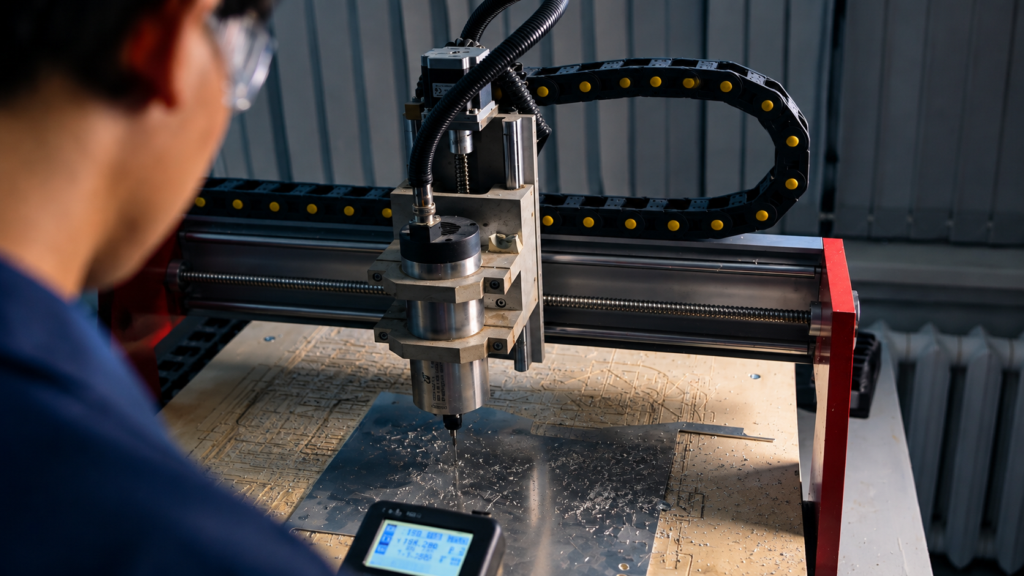
We bolted a flat aluminum undertray to our endurance car in 2016. Somebody on a forum had promised free lap time. We recorded no gain worth the trouble. Two events later a builder of sports racers looked along the side of the car, found the gaps where air was escaping, and told us we had installed a table. That night we riveted rubber strips down both edges in the paddock.
Next morning the car turned in differently. Nothing dramatic. The front stopped washing out in the quick left at the end of the back straight, and my times dropped about four tenths with nothing else changed.
2016
A flat aluminum undertray on the endurance car. No gain worth the trouble.
THE FIX
Rubber strips riveted down both edges, overnight in the paddock.
NEXT MORNING
About four tenths quicker, with nothing else changed.
Those rubber strips are the whole story of Formula 1’s most argued about piece of bodywork. A sealed floor pulls the car down. Break the seal and the pull goes away, usually at the worst moment.
Lotus found it first and the rules caught up
Colin Chapman’s team got there in 1977. The sidepods of that car were shaped underneath like upside down wings, and skirts along each side did the job our rubber strips did, on a budget with more zeros.
Cornering speeds went up fast enough that the governing body acted twice. Sliding skirts were prohibited from 1981. From 1983 the underbody between the wheels was required to be flat.
1977
Lotus shapes the sidepods like upside down wings, sealed by skirts.
1981
Sliding skirts prohibited.
1983
The underbody between the wheels must be flat.
Forty years followed with downforce coming mostly from wings, which is the expensive way to buy it. A wing costs drag. It also leaves turbulence behind that makes life miserable for whoever is following.
What the 2022 rules brought back
Four eras of the F1 floor
| Era | Underbody | What came of it |
|---|---|---|
| 1977 to 1980 | Venturi sidepods sealed by sliding skirts | Cornering speeds the rule book could not live with |
| 1981 to 1982 | Tunnels, skirts prohibited | Teams chasing the same seal by other means |
| 1983 to 2021 | Flat underbody required | Downforce bought from wings, and paid for in dirty air |
| 2022 to 2025 | Sealed tunnels return | Close racing on paper, porpoising in practice |
| 2026 | Flat central floor into a larger diffuser doing less work than the tunnels, 150 mm narrower | Downforce down about 30 percent, drag down 55 |
| Compiled from the FIA rule texts, plus the explanatory material Formula 1 and Motorsport published around the 2022 and 2026 changes. | ||
Compiled from the FIA rule texts, plus the explanatory material Formula 1 and Motorsport published around the 2022 and 2026 changes.
The cars introduced in 2022 carried two sealed tunnels running back along the underbody, and the load they made arrived without the wake problem.
On paper this was the fix for close racing. It also produced something nobody had budgeted for. Cars bounced down the straights, several impacts a second, from the opening weekends onward.
The mechanism is documented. Aerodynamic load builds, the car is drawn toward the surface, the flow beneath it separates, load is lost, the suspension returns the car to ride height and the sequence repeats. The phenomenon acquired a name within weeks. Intervention by the governing body followed during that same season.
LOAD BUILDS
The car is drawn toward the surface.
FLOW SEPARATES
Load is lost.
SUSPENSION LIFTS
The car returns to ride height, and the sequence repeats.
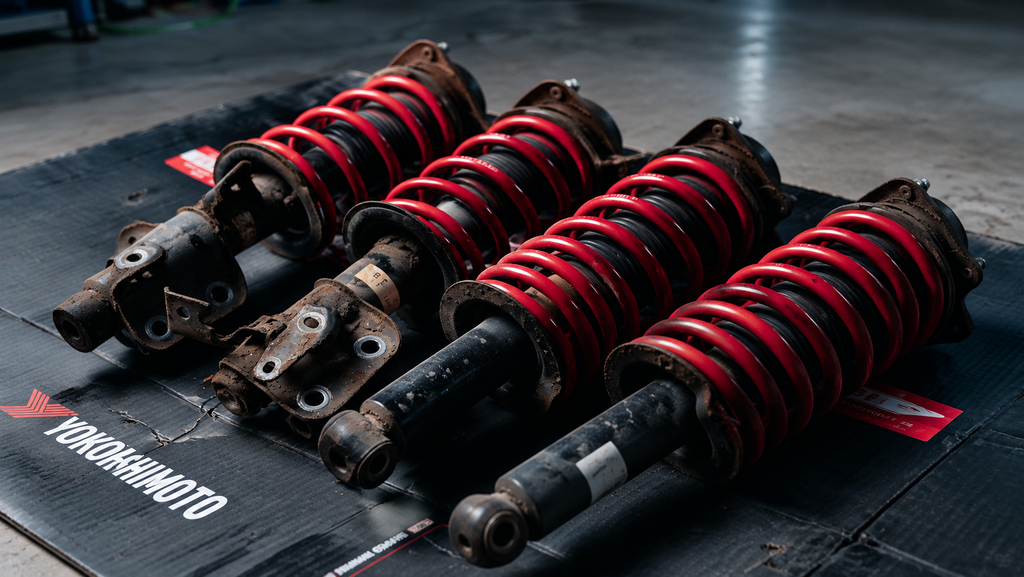
Anyone who has run a stiff car over a bad crest knows a smaller version of the feeling. I did it to myself on borrowed springs one summer. The resemblance was close enough that I recognized the motion on television before the commentators named it.
The 2026 reset
What changed for 2026
| 2026 change | Number |
|---|---|
| Downforce against the previous generation | Down about 30 percent |
| Drag | Down 55 percent |
| Floor width | 150 mm narrower |
| Wheelbase | 200 mm shorter, now 3400 |
| Width across the car | 100 mm slimmer, now 1900 |
| Minimum weight | 768 kilograms, counted as 722 for the car and 46 for tires |
| Wing modes | Active front and rear wings, one setting for corners and one for straights |
| Overtaking aid | DRS replaced by extra electrical energy for the chasing car |
| Sources: Formula 1 and FIA materials on the 2026 regulations. | |
Sources: Formula 1 and FIA materials on the 2026 regulations.
The tunnels were removed for 2026. What sits under the car now is a flat central floor running back into a larger diffuser that still does less of the work than the tunnels did, and the floor lost 150 millimeters of width on top of that.
Total downforce came down by around 30 percent against the previous generation. Drag fell by 55. Both numbers are the ones Formula 1 published with the rules.
30%
less downforce than the previous cars
55%
less drag
150 mm
narrower floor
The cars themselves are smaller and lighter. DRS has been withdrawn and its functions distributed between two systems. Movable front and rear wings are permitted to switch between a cornering configuration and a low drag configuration, available to all competitors rather than to a car running within one second of another. The overtaking provision now takes the form of additional electrical energy, granted to the pursuing car and withheld from the leader.
ACTIVE WINGS
Front and rear wings switch between a cornering setting and a low drag setting, for every car on the grid.
OVERTAKING AID
Extra electrical energy for the car doing the chasing, and not for the leader.
Why trade away the cheap downforce
Because the cost was charged elsewhere. A floor operating at its optimum height, a couple of centimeters off the ground, requires stiff springs and tolerates curbs poorly. Circuits with uneven surfaces become a liability, and development expenditure is directed toward running lower than the competition without provoking a stall.
Four seasons of that loading were absorbed by the drivers. The 2026 answer transfers a greater share of the grip to wings under the driver’s control, and a smaller share to a surface liable to stall without warning.
Where the theory meets a student
Aero grip is the hardest thing I have ever had to explain from the right seat. It only shows up once you are going fast enough to have earned it, which is backwards from the way anybody learns to drive. Slow through a quick corner and the car feels like any other car. Quick through it and the thing is glued down. In between you have to keep your foot in while your gut argues with you.
I have ridden with people who lift in that exact spot, lap after lap, all day long. Nothing is wrong with their instincts. Every road car they have owned taught them to back off right there, and this one wants the opposite. Now hand a professional the same moment at three times the speed, with a floor that might stall under him.
What those rubber strips were worth
Our undertray never made real downforce. It made a small pressure difference, and most of that four tenths came from the front end finally getting a break in one corner.
What stuck with me was the principle. Grip that needs a seal to hold is grip with strings attached, and the rule book has been arguing over those strings since Chapman.
What readers ask me about floors
What is ground effect, in plain terms?
Downforce that comes from under the car instead of over it. Seal the edges, get the air moving quickly underneath, and the pressure difference holds the car down.
Why did skirts get banned?
They worked too well. Once the floor sealed properly the cornering speeds took off, so skirts went in 1981 and a flat underbody followed two years after that.
Why did the 2022 cars bounce?
The floors stalled at low ride height, lost their load, then recovered it as the suspension returned the car upward. The cycle repeated several times a second and was named porpoising.
Is there ground effect in the 2026 cars?
A reduced amount. The sealed tunnels have been removed, the floor is flat through the center and runs back into a larger diffuser that still does less work than the tunnels did, and total downforce is down by approximately 30 percent.
More Stories
Abu Dhabi 2021 and the One Word the FIA Changed Afterward