


Who is fastest over a set number of laps? That is the question most motor racing asks. Endurance racing asks a different one, and the difference is the whole sport: how far can you get inside a fixed block of time without breaking the car or the people in it.
That change of question rewrites almost everything. The clock replaces the lap counter. Three drivers share one steering wheel. A pit stop stops being a quick tire change and becomes a planned event with a crew, a schedule and a person climbing out while another climbs in. And the fastest car on a single lap very often loses.
I have run the small version of this for years, four of us splitting a Spec Miata and an entry fee, and the lesson arrives early. Nobody on a winning endurance team remembers who was quickest. Everybody remembers who handed the car over clean.
What endurance racing is
| Format | How it is decided | Who drives |
|---|---|---|
| Endurance race | Fixed duration. The flag falls when the clock expires, and the greatest distance covered wins | Crews of two or three, with minimum and maximum driving times |
| Sprint race | Fixed number of laps, usually forty minutes to two hours | Normally one driver from green flag to finish |
The structural difference between the two formats. Everything else in this article follows from it.
My own education in this came at Road Atlanta, where an engine let go on a Saturday morning and took the entire weekend with it. Nothing we had done up to that point counted for anything afterward. Hence reliability ahead of pace. Hence economy as a weapon. Hence a rulebook that will not let one person drive the whole race.
The fastest car wins sprints. The surviving car wins these.
Manufacturers keep coming back for one reason: this is the format that rewards engineering that works over engineering that peaks.
Formats, from four hours to twenty-four
| Duration | What it demands | Typical crew | Where you see it |
|---|---|---|---|
| 4 hours | One or two fuel windows, close to a long sprint | Two drivers | National and regional series |
| 6 hours | A full strategy cycle, with tire degradation mattering | Two or three drivers | World Endurance Championship rounds |
| 12 hours | Night or dusk running, with reliability becoming decisive | Three drivers | Sebring, Bathurst |
| 24 hours | A full day and night, with the track temperature swinging twice | Three drivers, sometimes four | Le Mans, Daytona, Spa, Nürburgring |
Formats as run by the major series, checked in October 2026. Crew sizes vary by category within the same race.
Four hours is the gateway format. One driver change, one planned fuel stop, no overnight shift pattern and no large crew. A spectator can watch the whole thing without planning a nap.
Six hours is where endurance racing becomes properly itself. There is time for a full strategy cycle, for tires to go off and come back, for a safety car to scramble the order and for teams to recover from it. The World Endurance Championship builds most of its calendar around this length.
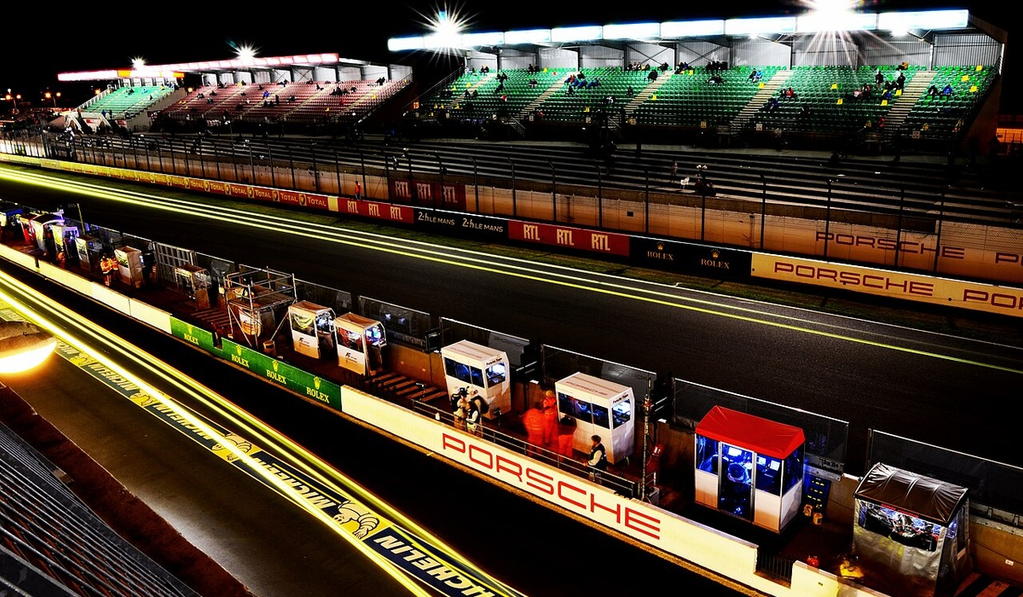
Darkness is what twelve and twenty-four hours add. The track cools, grip moves with it, headlights throw shadows across curbs that were visible all afternoon, and everybody in the car is working against a body clock. Somewhere in there a long motor race turns into a logistics operation with a race attached to it.
Driver changes and the rules that govern them
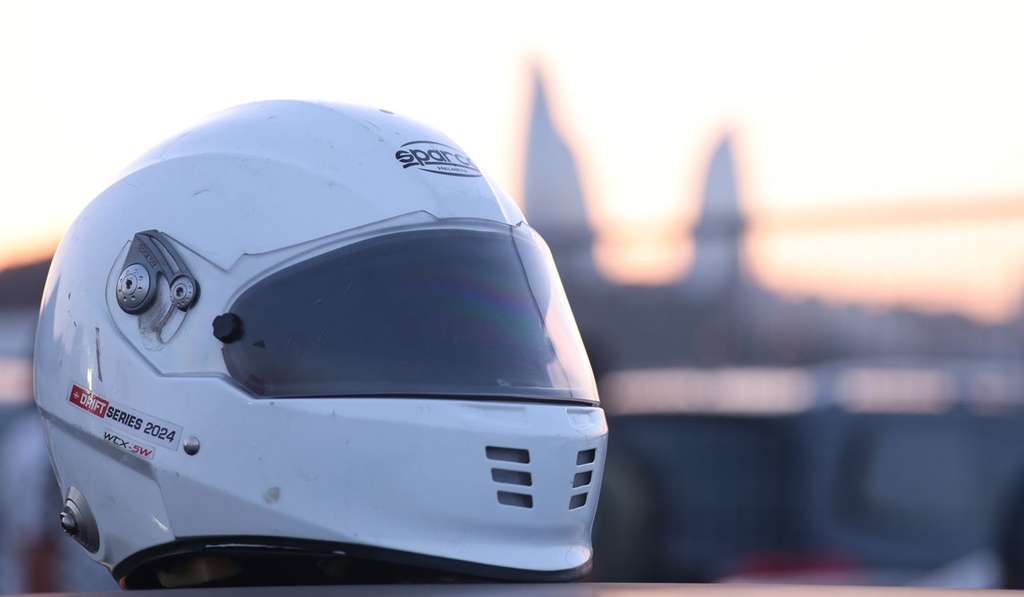
| The driver change | Detail |
|---|---|
| Where | In the pit lane, with the car stationary |
| The sequence | Belts off, one driver out, the next in, belts, radio and drink system connected, crew member straps him in |
| Timing | Folded into a refueling or tire stop wherever the regulations allow it |
| Restriction | Some series forbid refueling while work is done on the car |
| Minimum at Le Mans | Six hours of driving time across the race |
| Maximum at Le Mans | Fourteen hours in total, and no more than four in any six-hour window |
| LMGT3 crews | Two or three drivers, including at least one rated Bronze |
| Bronze and Silver minimums | 1:45, 2:20 and 2:55 for six, eight and ten-hour races |
| Points threshold | 45 minutes of driving under WEC sporting regulations, 60 minutes for Hypercar and LMGT3 by the 2025 Le Mans overview |
| Track limits | Penalties attach to the driver, not to the car |
Le Mans figures by reporting from The Race and a published guide to the 2025 regulations. The two sources disagree on who the six-hour minimum binds, which the text addresses directly.
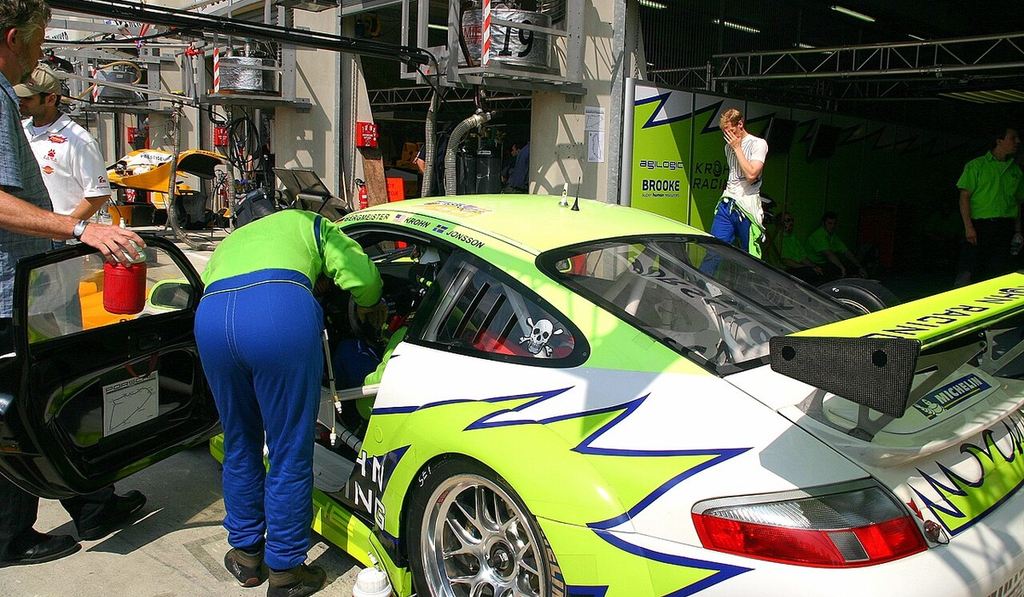
The car has to be stationary in the pit lane, and the sequence is in the table above. Where the time goes is a separate question, and the answer is that a well-run team never spends it on the change alone. Fuel goes in, tires come off, and the new driver gets strapped into the middle of all of it.
There are floors and there are ceilings, and both of them move from one series to the next, and from one category to the next inside the same race.
The strictest example is Le Mans, and its numbers are in the table below, by reporting from The Race. A floor, a ceiling, and a limit on how much of any six-hour window one person may take.
The sources disagree on one point, and smoothing that over would be dishonest. A separate guide to the 2025 Le Mans regulations has the six-hour minimum binding only Bronze and Silver drivers in LMP2 and LMGT3, leaving Gold and Platinum exempt. Who it binds therefore depends on which account you read. The other two limits appear in both.
Driver ratings are the reason any of this exists. Bronze, Silver, Gold and Platinum are the FIA grades that sort professionals from amateurs, and endurance regulations use them to force mixed crews.
Two further rules catch people out. A driver who has driven less than forty-five minutes in total scores no championship points under World Endurance Championship sporting regulations, with the 2025 Le Mans overview putting that threshold at sixty minutes for Hypercar and LMGT3. And track limits penalties attach to the driver rather than to the car, so each driver carries their own count of offenses.
Strategy, which is three variables pulling against each other
| Strategy term | What it means |
|---|---|
| Stint | The run between two pit stops, with its length set by fuel capacity |
| Double stinting | Running one set of tires through two fuel loads |
| Triple stinting | Running one set through three |
| Lift and coast | Easing off before the braking point and letting the car roll, trading lap time for fuel |
| Traffic | In a multi-class race, the slower cars a leader has to pass every few minutes |
The four terms that cover most endurance commentary, plus the variable spectators underrate.
Tires decide more races than anything else, because the calculation will not hold still. Track temperature across twenty-four hours can move twenty degrees Celsius, about thirty-five Fahrenheit. Perfect at two in the afternoon, unusable at four in the morning.
Traffic is the third and the one spectators underrate. In a multi-class race the fastest cars lap the slowest ones every few minutes, which means a leading driver spends a substantial share of every lap deciding how to pass a car twenty seconds a lap slower, driven by an amateur on their third stint of the night.
The quickest way to lose an endurance race is not to crash. It is to spend eight seconds behind a slower car, forty times.
A national series as a worked example
| 2026 marathon round | Circuit | Duration |
|---|---|---|
| 22 to 24 May | Moscow Raceway | 12 hours |
| 14 to 16 August | Igora Drive | 6 hours |
| 10 to 13 September | Fort Grozny | 4 hours |
| 8 to 11 October | Moscow Raceway | 6 hours |
Dates and durations from the series calendar, checked on 20 August 2026. Calendars move, so this is worth rechecking before publication.
Two things stand out there. One is the ladder: two drivers and a small crew get you into the four-hour race, and six and twelve hours follow without leaving the series. The other is scheduling, because those marathons share weekends with sprint rounds, which is why the weekends run four days instead of three. One trip, both formats, back to back, which is rare anywhere.
May holds the twelve-hour race, the longest on that calendar, and putting it there is unusual. Marquee endurance events normally sit in midseason, once the weather has settled.
Where to start watching
Three events are worth knowing by name.
Le Mans is the oldest of them and the one everything else gets measured against. June, a circuit that mixes a permanent track with closed public roads, and a winner decided by the greatest distance covered in twenty-four hours, provided the car completes one final lap after the clock runs out.
Daytona opens the North American season in January with the Rolex 24, run on a banked oval joined to an infield road course, which gives it a character no European endurance race has.
Spa hosts the headline twenty-four-hour GT event of the European year, on a circuit whose weather is famously capable of being dry at one end and wet at the other simultaneously.
All three are broadcast live and in full, and all three are better watched with a timing screen open alongside, because the running order in an endurance race is rarely what the television picture suggests. That part has not changed since I was watching them on a laptop in a trailer at two in the morning, waiting for my own stint.
Questions about endurance racing
How many drivers share a car in an endurance race?
Usually two or three, depending on the series, the category and the race duration. At the Le Mans 24 Hours crews of three are standard, and the regulations set both minimum and maximum driving times.
How long can one driver stay in the car?
Under World Endurance Championship rules at Le Mans, no driver may drive more than four hours in any six-hour period, with a maximum of fourteen hours in total across the race.
What is a stint?
The period a car runs between two pit stops. Its length is normally set by fuel capacity, and teams sometimes run two or three stints on a single set of tires to save time in the pit lane.
Is the winner the fastest car?
Rarely. The winner covers the greatest distance within the time limit, which usually means competitive pace combined with reliability, efficient pit work and clean running through traffic.
What do the driver ratings mean?
Bronze, Silver, Gold and Platinum are FIA grades that sort amateurs from professionals. Endurance regulations use them to require mixed crews and to set minimum driving times.
Jake Holloway is a club racer, track-day instructor, and motorsports editor based near Charlotte, North Carolina. He has raced karts, Legends cars, Spec Miatas, and amateur endurance cars, and he writes for GreenyCars about how racing actually works, from the rule book to the pit lane.
More Stories
The Dakar Rally and Why Finishing It Counts as Winning
The Ten Greatest F1 Drivers, Ranked by a Club Racer
The F1 Circuits Every Fan Should Know, and What Each One Is For
The F1 Races That Stayed Unsettled Until the End
F1 Driver Nicknames, the Professor to Mr. Saturday