




The hardest thing I had to learn as an instructor was when to say nothing. A student is loading the car into a corner badly, you can see exactly what the problem is, and the right call is to let him finish the lap and tell him on the straight. Say it mid-corner and you have added a second problem to the first one.
Scale that up until it decides championships and you have the job of a Formula 1 race engineer. One voice. One driver. A decision, running all afternoon, about what is worth saying at this exact moment.
What the job actually is
| Who feeds the race engineer | What they provide |
|---|---|
| Performance engineers | How the car is behaving, run by run, against what was expected |
| Tire engineers | Degradation, temperatures and how long a set will keep working |
| Strategists | Pit windows, undercut and overcut options, and what rivals are likely to do |
| Data engineers and the factory | Telemetry analysis during the session, with support from a remote operations room |
| The driver | The half of the picture that no sensor records |
| Reports to | The head of race engineering, who in several teams is a former race engineer still doing the job |
Team structure as described by Formula 1, Motor Sport Magazine and team material, checked in October 2026. Titles vary between teams.
Each driver has one race engineer, and that engineer is the single point of contact between the car and everybody working on it. The table above has who feeds into that chair.
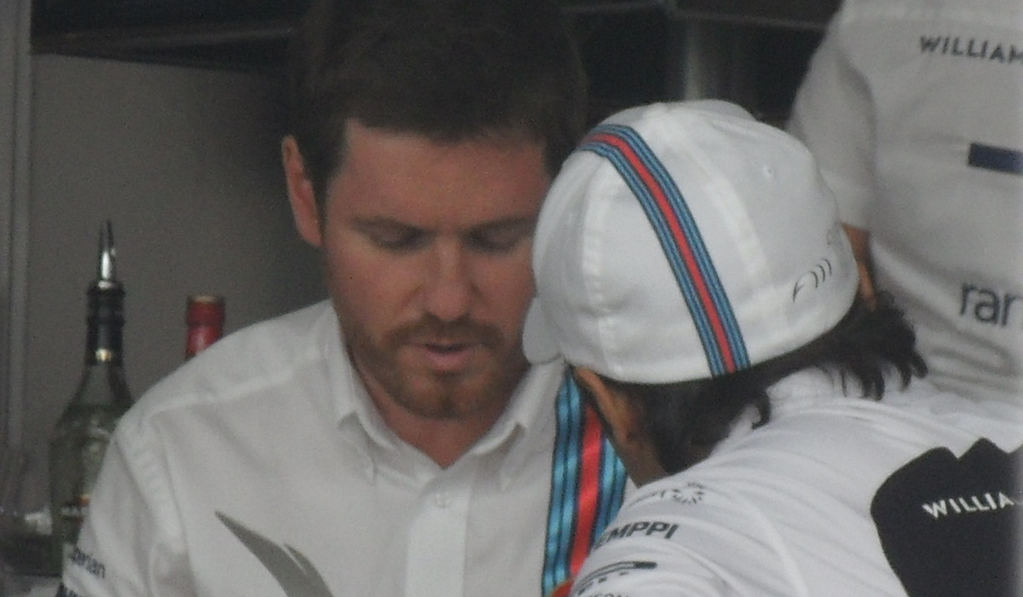
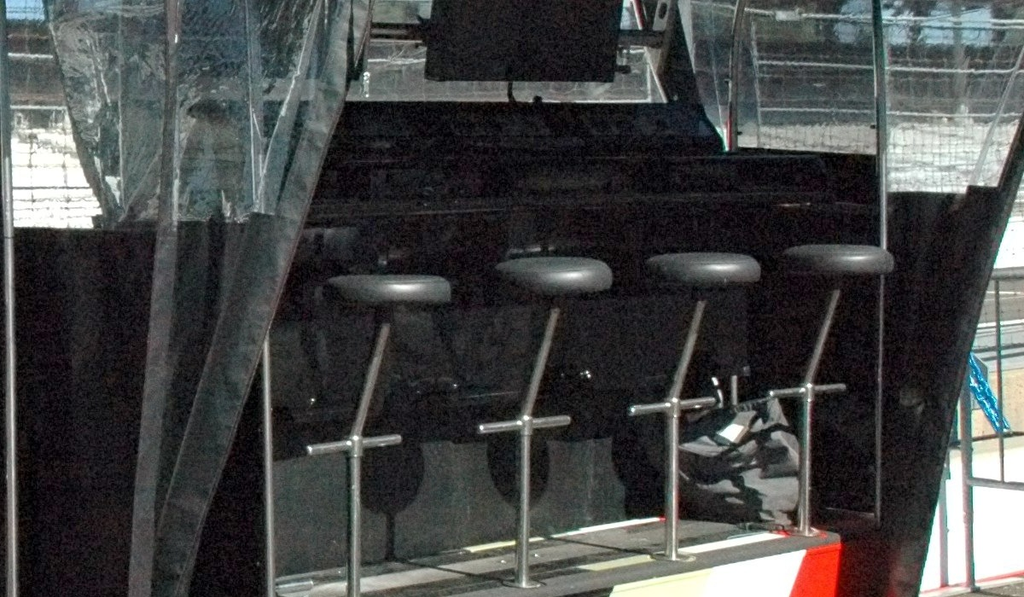
Across a weekend the setup is run from that chair. So is the plan for each session, and the translation of driver feedback into changes on the car. On Sunday that same person is on the pit wall, headset wired to the cockpit. Everything lands on the one desk: tire degradation, fuel, energy, traffic, gaps. Only what survives the filter ever reaches the driver.
Half engineering, half psychology, with no clean line between the two halves. A decade with the same driver is what the best of them manage. The merely competent move on sooner.
The weekend, in order
Practice carries most of the work and almost no audience. Runs get planned in advance, one question per run, and through the session the driver’s report is held up against the data. Disagreement between those two is routine, which surprises people outside the garage.
Qualifying is a timing problem. Track position in the queue, when to release the car, how many laps the tires will give, whether to go again. Most of that is decided before the session starts and then thrown away when somebody crashes.
The race itself is management. Fuel and energy. Tires. The gap behind and the gap ahead. A strategy that gets rewritten every time one of the other nineteen cars does something nobody planned for.
What good radio sounds like
Short. Specific. Timed so the driver can act on it rather than think about it.
Nobody wants a sentence explaining why the pit stop is coming, they want the word “box,” twice, with enough notice to set up the entry. The explanation can wait until Thursday.
The harder half is restraint. A driver who has just gone off knows it. Saying so adds nothing, and an engineer who fills silence with information is making the car slower. My own version of that lesson came from a right-hand seat at forty miles an hour, where the stakes were different and the principle was not.
The partnerships people remember
| Partnership | Detail |
|---|---|
| Peter Bonnington and Lewis Hamilton | Together at Mercedes from 2013, six drivers' titles, the most successful pairing in the sport |
| Peter Bonnington and Kimi Antonelli | With Antonelli since 2025, alongside running race engineering at Mercedes |
| Gianpiero Lambiase and Max Verstappen | Together at Red Bull since 2016, through every one of Verstappen's titles |
| Carlo Santi and Lewis Hamilton | Paired for 2026 after Riccardo Adami was reassigned, first win together at Barcelona-Catalunya in June |
| Will Joseph and Lando Norris | Together at McLaren since 2019, with Joseph also directing race engineering there |
Pairings as reported for the 2026 season. Engineer assignments change between and during seasons.
Peter Bonnington and Lewis Hamilton ran together at Mercedes from 2013 and won six drivers’ titles in that time, which makes it the most successful pairing the sport has produced. Bonnington now works with Kimi Antonelli and runs race engineering for the team.
Gianpiero Lambiase has been on Max Verstappen’s radio since 2016, through every one of his championships, and the two of them argue on air in a way that would look like a crisis anywhere else and is evidently how they work.
Hamilton’s move to Ferrari brought the other kind of story. Riccardo Adami ran his first season in red, the partnership did not settle, and for 2026 the job went to Carlo Santi. They took their first win together at Barcelona-Catalunya in June.
What the 2026 cars added to the job
Energy management, first of all. Output on the current power units is split almost evenly between combustion and electrical power, and deployment and recovery have become a conversation that runs lap by lap instead of a setting chosen beforehand.
Active aerodynamics added another layer, since wing modes change along a lap and the overtake function has to be used at the right moment rather than whenever it is available.
The result is more traffic on a radio channel that was already busy, and the premium on knowing what to leave out has gone up rather than down.
Why the voice matters
A driver at speed is working with a narrow slice of information. He has mirrors, a steering wheel display, what he can feel through the car and whatever anybody tells him. Everything else about the race is happening somewhere he cannot see.
The engineer has the opposite problem. All of the information and none of the feel, sitting still while somebody else does the part that cannot be delegated.
Between those two incomplete pictures is a radio channel, and the quality of what crosses it is worth real lap time. I have been the voice in somebody’s ear, badly at first, at a speed where mistakes cost paint rather than points. The job does not change. Only the price does.
Questions about race engineers
What does an F1 race engineer do?
Each driver has one. The engineer runs the car’s setup, plans each session, turns driver feedback into changes, and is the voice on the radio during the race.
Who talks to the driver on the radio?
The race engineer, almost always. Other voices appear occasionally, but the channel belongs to one person by design.
Who is Max Verstappen’s race engineer?
Gianpiero Lambiase, who has had the job since Verstappen joined Red Bull in 2016.
Who is Lewis Hamilton’s race engineer at Ferrari?
Carlo Santi, from 2026, after Riccardo Adami was moved to another role within the team. They took their first win together in June 2026.
What makes a good race engineer?
Technical depth, and knowing what to leave out. Information that arrives at the wrong moment makes a driver slower rather than faster.
Jake Holloway is a club racer, track-day instructor, and motorsports editor based near Charlotte, North Carolina. He has raced karts, Legends cars, Spec Miatas, and amateur endurance cars, and he writes for GreenyCars about how racing actually works, from the rule book to the pit lane.
More Stories
The Dakar Rally and Why Finishing It Counts as Winning
The Ten Greatest F1 Drivers, Ranked by a Club Racer
The F1 Circuits Every Fan Should Know, and What Each One Is For
The F1 Races That Stayed Unsettled Until the End
F1 Driver Nicknames, the Professor to Mr. Saturday