
There is a specific sound a room makes when a race turns. I have heard it in a club trailer with four people in it and once in a bar in Charlotte where nobody had come to watch Formula 1 and everybody ended up watching it anyway.
Exciting is a word that gets attached to any race with a safety car in it, so this list uses a narrower test. A race qualifies here if the outcome stayed genuinely unsettled late, and if what settled it was somebody driving rather than somebody retiring.
Decided on the last lap
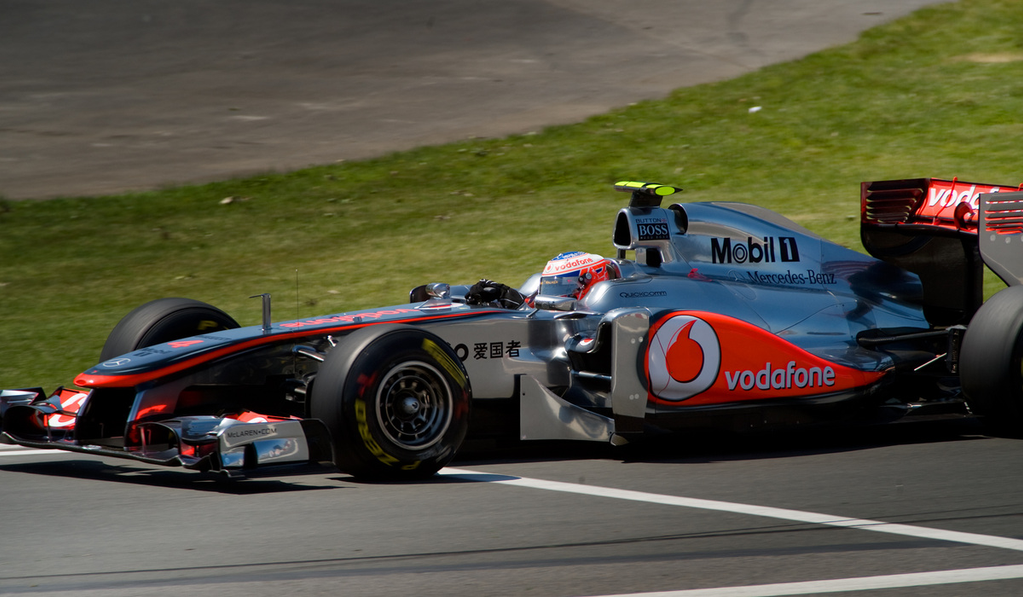
Canada 2011 is the one I would show somebody who has never watched this sport. Jenson Button started seventh, collided with his own teammate, got a drive-through penalty, collided with Fernando Alonso, pitted six times and was running last on lap forty. He won it on the final lap when Sebastian Vettel ran wide at turn six.
The race lasted four hours, four minutes and thirty-nine seconds, which is still the longest in the history of the championship. More than two hours of that was a red flag stoppage, and six safety car periods took up much of what was left. Button led for about half of one lap, the last one.
Japan 2005 is the same ending arrived at differently. Kimi Räikkönen started seventeenth, worked his way up all afternoon and passed Giancarlo Fisichella into the first corner on the final lap. Before Button, that was the last time anybody had taken the lead of a Grand Prix on the last lap.
Decided at the last corner, for fifth place
A fight over fifth place is what everybody remembers from Brazil 2008, which makes it the strangest entry on any list of this kind. Felipe Massa took the win. For about twenty seconds after that, he was also the world champion. Then Lewis Hamilton passed Timo Glock at Junção, the last corner before the run to the line, took fifth, and the title went the other way by a point.
What makes it unbearable to watch even now is the Ferrari garage. They celebrate, and then they stop, and the camera stays on them while they work out what has happened somewhere else on the circuit.
The rain ones
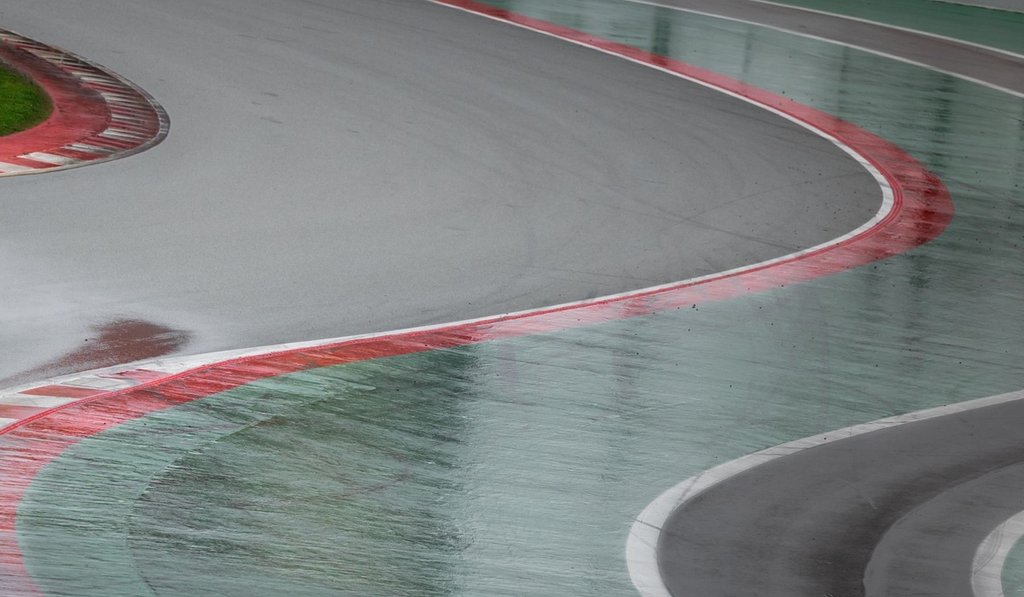
Rain does not automatically make a race good. It makes a race unpredictable, which is different, and most wet races produce a procession behind a safety car followed by an argument about tires.
What rain does is remove the car advantage, and that is when you find out who is actually quickest. Senna at Donington in 1993 is the standing example, four cars passed on the opening lap, from fifth to first, in conditions nobody else could read. Monaco in 1984 is the other, the same driver in his first season, closing on the leader until the organizers stopped the race.
I have raced in weather like that exactly twice, in a Spec Miata, and both times the lesson was the same. Everybody slows down by a different amount, and the gaps between cars stop meaning anything at all.
Two cars, one position, no championship at stake
Dijon in 1979 is on every list of this kind, and it is on this one because the thing being fought over did not matter. Gilles Villeneuve and René Arnoux spent the last three laps swapping second place, banging wheels, running off the road and coming back, with the win already gone to somebody else.
Nothing gets closer to what people mean when they say racing. No points argument, no title implication, just two drivers refusing to be the one who lifted.
What makes a race exciting rather than loud
Three things, and none of them is incident count. A result that stays open late, which is not the same as a close finish. Two or more drivers who are genuinely trying rather than managing a gap. And consequence, meaning the outcome changes something that matters to somebody.
By that test, a race with eight safety cars and a dominant winner is a long afternoon, not a classic. Abu Dhabi 2021 passes the first and third of those and fails the second, which is why it gets argued about rather than rewatched, and why it has an article of its own.
What I actually rewatch
| Race | What happened |
|---|---|
| Canada 2011 | Button started seventh, ran last on lap 40, pitted six times and won on the final lap. Longest race in championship history at 4h 04m 39s |
| Japan 2005 | Räikkönen started seventeenth and passed Fisichella into turn one on the last lap to win |
| Brazil 2008 | Massa won the race and was champion for about thirty seconds, until Hamilton took fifth from Glock at the final corner |
| France 1979 | Villeneuve and Arnoux traded second place for three laps at Dijon, wheels touching, with the win already decided |
| Europe 1993 | Senna went from fifth to first on the opening lap at Donington, passing four cars in changing conditions |
| Monaco 1984 | Senna, in his first season, closing on the leader in heavy rain until the organizers stopped the race |
| Abu Dhabi 2021 | A title decided on the last lap after a safety car procedure that is still argued about. Covered separately |
Race details from official classifications and contemporary reports, checked in September 2026. The list is one writer’s selection rather than a ranking.
Canada 2011, about once a year, usually in winter. The Dijon laps, which take four minutes. The last ten minutes of Brazil 2008, which I have never managed to watch all the way through without standing up.
The table above has the full list, with what happened in each one. Your list is different, and if it is not, one of us is not paying attention.
That bar in Charlotte, by the way, was showing Brazil 2008 on a screen behind the pool table. By the final corner there were maybe fifteen people watching a sport they did not follow, and one of them asked me afterward whether it was always like that. No. That is the whole point of making a list.
Questions about classic races
What is the longest F1 race ever?
The 2011 Canadian Grand Prix, at four hours, four minutes and thirty-nine seconds, including a red flag period of more than two hours.
How did Jenson Button win in Canada in 2011?
He started seventh, had two collisions and a drive-through penalty, made six pit stops, ran last on lap 40 and took the lead on the final lap when Vettel ran wide.
Why is Brazil 2008 remembered?
Felipe Massa won the race, but Lewis Hamilton passed Timo Glock at the final corner to take fifth place and the championship by a single point.
When did a driver last take the lead on the final lap?
Button in Canada in 2011. Before that it was Kimi Räikkönen in Japan in 2005, who had started seventeenth.
Does rain make a race exciting?
Not by itself. Rain removes the car advantage, which makes the result less predictable, but most wet races still end up behind a safety car.
Jake Holloway is a club racer, track-day instructor, and motorsports editor based near Charlotte, North Carolina. He has raced karts, Legends cars, Spec Miatas, and amateur endurance cars, and he writes for GreenyCars about how racing actually works, from the rule book to the pit lane.
More Stories
The Dakar Rally and Why Finishing It Counts as Winning
The Ten Greatest F1 Drivers, Ranked by a Club Racer
The F1 Circuits Every Fan Should Know, and What Each One Is For
F1 Driver Nicknames, the Professor to Mr. Saturday
How Endurance Racing Works, from Four Hours to Twenty-Four