


A friend of mine has a test for this. If you can name a corner at a circuit without looking it up, the circuit is iconic. If you cannot, it is a venue. He came up with it in a parking lot at Road Atlanta and has been insufferable about it ever since, mostly because it works.
Eau Rouge. Parabolica. Copse. The Esses. Casino Square. Nobody has to explain those to anybody who follows this sport, and no amount of marketing has ever made a new corner join that list on schedule.
Four survivors from the first season
Seven races made up the first championship season in 1950. Four of those venues are still on the calendar, which is a survival rate nothing else in motorsport can claim.
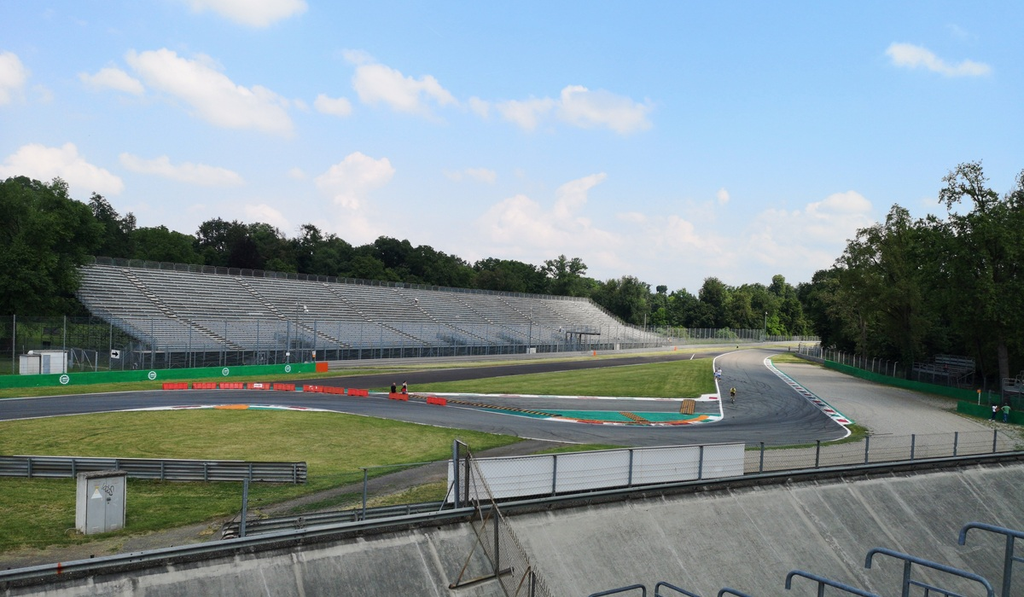
Monza is the oldest purpose-built survivor and the fastest place the sport still visits, which is why the Temple of Speed nickname has outlived several generations of people who found it corny. It has hosted a Grand Prix every year since 1950 except one, when the track was being rebuilt.
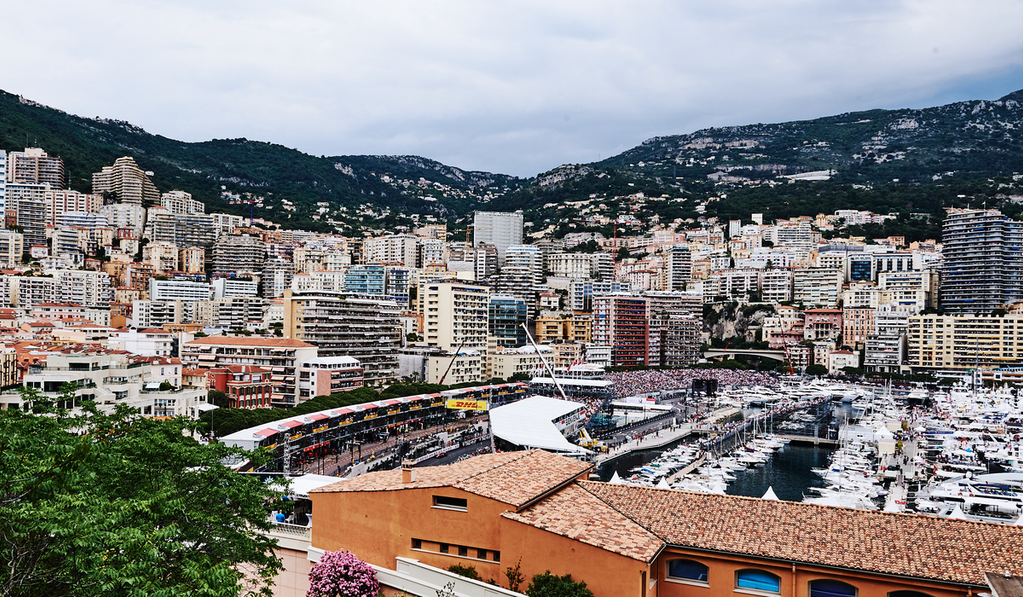
Monaco makes the opposite argument in the same breath. Slowest circuit on the calendar, hardest to pass on, and the one every driver still wants on his record. Three and a third kilometers of guardrail with no room for error anywhere on it.
Spa and Silverstone fill out the four. Spa is the long one, in the Ardennes, with the crest everybody knows and the weather nobody can plan around. Silverstone came first of all, in May 1950, on an old airfield in Northamptonshire. What drivers talk about there is the high-speed corner sequence, and the tone they use has not changed in seventy-six years.
The ones that earned it later
Suzuka arrived on the calendar in 1987 and became a drivers’ circuit within about two seasons. The layout crosses over itself, which no other Grand Prix track does, and the first sector is a rhythm test that separates people in a way modern circuit design rarely manages.
Interlagos runs anticlockwise, sits on a hillside outside São Paulo and has settled as many championships in the last twenty years as anywhere but Abu Dhabi. The crowd there is loud in a way that survives a television transmission, which is not a small thing. I have watched races from grandstands where the noise was the only reason I remembered the afternoon.
Singapore turned up in 2008 as the first night race in the sport’s history and the first street circuit in Asia. It was a marketing idea that turned into a proper event, which is rarer than the calendar suggests.
What actually makes one stick
| What makes a circuit stick | How it shows up |
|---|---|
| A corner people can name | Eau Rouge, Parabolica, Copse, Casino Square, the Esses |
| Consequence | A mistake costs something visible from the grandstand |
| Terrain | Elevation or a layout that will not flatten into a diagram |
| Time | Enough history for somebody to begin a sentence with remember when |
The four tests used in this article. They are one writer's opinion rather than a formal standard.
Four things, as far as I can tell. A corner people can name without help. Consequence, by which I mean a mistake that costs something visible. Elevation, or a layout that refuses to flatten into a diagram. And time, because a circuit needs enough history behind it for somebody to start a sentence with remember when.
The last one is why new venues struggle with this word. Las Vegas has been on the calendar since 2023 and has produced some good racing, and it will not be iconic for another twenty years no matter how much money gets spent on it. That is not a criticism. It is arithmetic.
Zandvoort is the counterexample that proves the rule. Built in 1948, off the calendar after 1985, back in 2021 with banked corners cut into the dunes. It belonged again from the first session, and nobody needed the history explained to them, because the shape of the place was doing the explaining.
The ones that get left off lists like this
The Nordschleife, which Formula 1 left after 1976, is still the most famous circuit in the world and has not hosted a Grand Prix in half a century. The shorter circuit built alongside it hosted Grands Prix on and off until 2020. Watkins Glen ran the United States Grand Prix for twenty years and gets mentioned once a decade now.
The same phenomenon exists at club level. Road Atlanta, Sebring and Laguna Seca carry a weight among American racers that owes nothing to television coverage. Ask anybody who has been down the Corkscrew, and watch what their hands do while they answer.
What I would tell somebody picking one trip
| Circuit | On the calendar since | Length | What it is for |
|---|---|---|---|
| Monza, Italy | 1950 | 5.793 km | Raw speed, slipstreaming and the oldest continuous entry on the calendar |
| Monaco | 1950 | 3.337 km | Precision between walls, and the hardest place in the sport to pass |
| Spa-Francorchamps, Belgium | 1950 | 7.004 km | Elevation, weather and the longest lap of the season |
| Silverstone, United Kingdom | 1950 | 5.891 km | High-speed corner sequences on an old airfield, and the first championship race |
| Suzuka, Japan | 1987 | 5.807 km | A figure-eight layout and a first sector that sorts drivers out |
| Interlagos, Brazil | 1973 | 4.309 km | Anticlockwise, hilly, and the place championships tend to be settled |
| Zandvoort, Netherlands | 1952, with 2026 its final year | 4.259 km | Banked corners in the dunes, back from 2021 and off the calendar after 2026 |
| Marina Bay, Singapore | 2008 | 4.927 km | The first night race in the sport, and a street circuit that became an event |
| Circuit of the Americas, United States | 2012 | 5.513 km | A modern layout that borrowed its best corners from older circuits |
| Las Vegas, United States | 2023 | 6.201 km | The newest big-money venue, and the test case for whether iconic can be bought |
Lengths and first appearances as published by Formula 1 and ESPN, checked in September 2026. Zandvoort first appeared in 1952, left after 1985, returned in 2021 and hosted its last Grand Prix in August 2026.
The places worth the trip are the ones where the shape of the land does the work. Spa, Suzuka, Interlagos and Zandvoort all put cars through terrain rather than around it, and terrain is the one thing a broadcast has never been able to hand you. Cameras flatten hills. They always have.
Monaco stays on the list as the exception. The racing there is usually poor, and everybody says so out loud. Standing close enough at Casino Square to hear the road surface change under a Formula 1 car is worth a weekend of poor racing, and I say that as somebody who has never done it and intends to.
The table above has the ten I would send anybody to, with what each one is actually for. My friend with the corner test would argue about three of them, and that is the correct response to any list like this.
Questions about F1 circuits
Which F1 circuits have been on the calendar longest?
Monza, Monaco, Spa-Francorchamps and Silverstone all hosted races in the first championship season in 1950 and are still on the calendar.
What is the longest circuit in Formula 1?
Spa-Francorchamps, at 7.004 kilometers. The shortest is Monaco, at 3.337 kilometers.
Which circuit is the fastest?
Monza, by average lap speed, which is why it has been called the Temple of Speed for generations.
Why is Monaco still on the calendar if overtaking is so hard?
Because of what it is rather than what it produces. It is part of the Triple Crown of motorsport and the closest a spectator can get to a Formula 1 car at speed.
Can a new circuit become iconic?
Eventually. Three of the four tests in this article can be designed in. The fourth is time, and nothing shortens it.
Jake Holloway is a club racer, track-day instructor, and motorsports editor based near Charlotte, North Carolina. He has raced karts, Legends cars, Spec Miatas, and amateur endurance cars, and he writes for GreenyCars about how racing actually works, from the rule book to the pit lane.
More Stories
The Dakar Rally and Why Finishing It Counts as Winning
The Ten Greatest F1 Drivers, Ranked by a Club Racer
The F1 Races That Stayed Unsettled Until the End
F1 Driver Nicknames, the Professor to Mr. Saturday
How Endurance Racing Works, from Four Hours to Twenty-Four